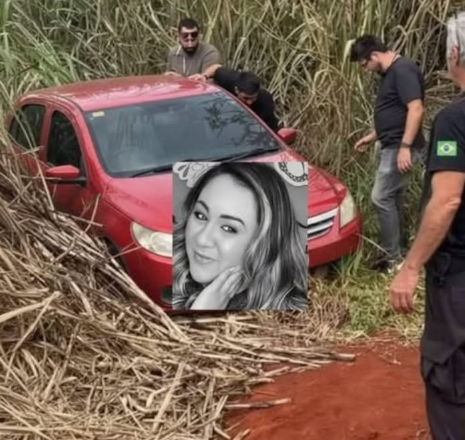
For sixty painful days, the world was a landscape of shadows for Raisa’s family.
Time has lost its linear flow, becoming a repetitive loop of sleepless nights, frantic phone calls, and the suffocating silence that only exists after disappearance.
Each ring of the doorbell was a spark of hope followed by the devastating realization of absence.
Every unidentified shadow on the street became a potential glimpse of the girl who vanished into the ether without a single clue or final word.
Two months of what-ifs had turned their home into a temple of unanswered questions, where the air was heavy with the smell of stale regret.
Then, on a Tuesday morning that felt no different from dozens of empty mornings before, the call finally came. It was a moment they’d replayed in their minds a thousand times, yet nothing could have prepared them for the physical sensation of the earth shaking beneath them. The voice on the other end was clinical yet urgent, uttering a single sentence that shattered the stagnation of their lives: Raisa had been found and was alive.
The immediate reaction was a wave of relief, a surge of emotion so intense he felt like drowning. For a few fleeting seconds, the nightmare was over. Posters taped to telephone poles could be torn down; police files could be moved to another filing cabinet. Their daughter, their sister, their Raisa, were breathing. But as the initial shock began to subside, a quiet, unsettling silence descended, chilling them to the core. Relief wasn’t a destination, but a gateway to a much darker mystery.
As her family rushed to the small regional hospital where she had been taken, the lack of details began to unsettle them. Authorities were tight-lipped, providing only the barest of details about her recovery. She was found on the side of a rural road, nearly fifty miles from where she was last seen by a passing driver before dawn. There was no explanation of her whereabouts, no description of her abductor, and no clear narrative of the past eight weeks. It was as if two months of her life had been surgically removed from the world’s timeline.
When they finally entered her room, they found a stranger with Raisa’s face. She was physically diminished, her skin pale, and her eyes sunken from the depths of experience no twenty-year-old should have. But it was her silence that was most terrifying. She looked at them with recognition, but the recognition was filtered through a thick layer of trauma. When her mother reached out to touch her hand, Raisa didn’t flinch, but she didn’t lean in either. She was a statue of her former self, a ship that had returned to port but lost its cargo somewhere at the bottom.
Doctors spoke hushedly of “dissociative fugue” and “extreme psychological shock,” but the medical terminology did nothing to soften the distinction between her arrival and her disappearance. There were no signs of physical struggle, no evidence that she had been held against her will in the traditional sense, yet her body told a story of deprivation. She had lost significant weight, and her hands were rough, as if she had been working in a way she had never done before. Most disturbing were the clothes she was wearing when found—modest, handmade garments that bore no resemblance to the contemporary attire she wore on the day she disappeared.
As the days turned into a week, the family waited for the dam to burst, for the story to pour out in a mad rush of tears and explanations. But Raisa remained withdrawn. She sat for hours staring out the window, tracing invisible patterns on the sheets with her fingers. When detectives arrived to conduct interviews, she answered their questions with a poignant, rhythmic accent, her words lacking specifics. She spoke of the cold, the sound of running water, and a “quiet place” where clocks did not move. She couldn’t—or wouldn’t—name a single person who had been with her.
The community that had supported the search with candlelight vigils and social media campaigns now watched from a distance with a mixture of curiosity and suspicion. In the absence of a clear villain or a dramatic story of survival, the narrative began to darken. Rumors whispered through the city like smoke: Did she leave of her own free will? Was it a trick? But those who saw Raisa’s eyes knew the truth was far more sinister. This wasn’t the silence of someone harboring a secret; this was the silence of someone whose soul had been put back together.
Her father, a man who spent his life solving problems through logic and hard work, prowled the hallways of their home at night, just as he had when she disappeared. The search for Raisa was over, but the search for the truth had only just begun. He began exploring the area where she was found—a desolate patch of land covered with dense forests and abandoned farmsteads. He discovered local legends about “hollows”—nooks of the wilderness where people claimed time passed differently, where ancient customs were still practiced, far from the prying eyes of the modern world.
A disturbing realization began to creep over the family: Raisa was back, but the girl they knew might be gone forever. She began to develop strange habits—she avoided electricity, used archaic phrases, and suddenly, with a mastery of weaving and sewing, abilities she had never possessed before. It was as if she had spent those two months in another century, or perhaps an entirely different reality. The “found” status was a legal formality, but in the silence of the living room, they felt the presence of a stranger who was still very much lost.
One evening, sitting on the porch as the sun dipped below the horizon, Raisa finally uttered a sentence that wasn’t an answer to a question. She looked out at the blooming garden and whispered, “The veil is thin here.” When her brother asked what she meant, she simply turned her head and smiled—a slow, sad expression that didn’t reach her eyes. It was a warning that the world they inhabited wasn’t the only one, that her two-month journey had taken her to the very edge of the map.
The search for Raisa ended with a phone call, but her recovery became a lifelong vigil. Her family learned to live with the silence, accepting the daughter who returned while mourning the one who was gone. They stopped asking for directions, for a quiet place, or for handmade clothes. They understood that some mysteries were insoluble, and that sometimes finding her was only the beginning of a much deeper loss. The tragedy wasn’t just her two months of absence; it was the realization that she had brought silence with her, and that the earth would never stop shaking beneath their feet.