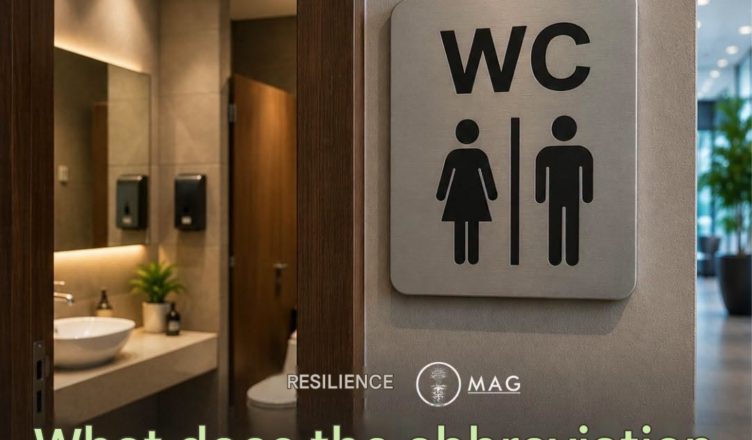
Have you ever noticed the abbreviation “WC”? It appears in airports, hotels, shopping malls, restaurants, and various establishments around the world. Even those who don’t speak English usually recognize that those two letters indicate a restroom.
But what does “WC” actually mean? The answer is linked to the history of hygiene , architecture, and the evolution of modern homes.
What does “WC” mean?
The abbreviation WC comes from the English expression Water Closet. Literally translated, it means something like “water compartment” or “water cabinet.” Today the name may sound strange, but when it first appeared it made perfect sense.
For much of history, homes did not have indoor toilets as we know them today. Therefore, it was common for bodily functions to be performed in structures located outside the house or in containers known as chamber pots.
With the arrival of plumbing and drainage systems in the 19th century, a small room equipped with a toilet connected to running water emerged.
At the time, this innovation represented a huge advance in hygiene, comfort, and quality of life. Therefore, the new space came to be called the Water Closet, differentiating it from the old restrooms.
Why is the acronym still being used?
Even with the evolution of modern bathrooms, the acronym has remained, mainly for practicality.
Because “WC” is short and widely recognized in different countries, it has become a kind of universal language for indicating restrooms, especially in public and tourist locations. This makes it easier for people who speak different languages to identify the facility.
“Bathroom,” “Restroom,” and “Toilet”: is there a difference?
Although many people simply translate everything as “bathroom,” some countries use different terms. Here are some examples:
Bathroom: originally means “room with a bathtub,” but in many places it is also used for toilet.
Restroom: This is one of the most common ways to refer to public restrooms in the United States.
Toilet: refers primarily to the toilet and is widely used in the United Kingdom.
Washroom: a common expression in Canada to indicate a bathroom.
These differences often cause confusion among first-time travelers.
And in Brazil?
Here, too, there are several ways to refer to the same environment.
Bathroom
It’s the most commonly used name and usually describes the complete room, including toilet, sink, and shower.
Restroom
It is usually a smaller bathroom, intended for guests, typically without a shower.
Toilet
It’s a more formal word, quite commonly used in hotels, restaurants, theaters, airports, and other public establishments.
Why is knowing this interesting fact useful?
Although it may seem like just a detail, understanding the meaning of “WC” can make international travel easier and help in quickly identifying restrooms in various countries.
Furthermore, the acronym is an example of how some expressions transcend generations and continue to be used even when their original meaning is no longer part of people’s daily lives.
A small acronym with a lot of history.
The next time you see a sign that simply says WC, you’ll know it means much more than just a bathroom.
These two letters are a legacy of the sanitary revolution that began in the 19th century and remain one of the most recognized symbols in the world when it comes to indicating the way to the bathroom.
Cover Image: Human Resilience