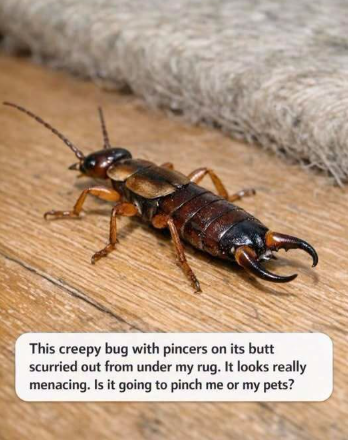
Discovering an unfamiliar insect inside your home can be an unsettling experience, especially when it has a pair of curved pincers at the end of its body. Many people are startled the first time they see an earwig, often wondering whether it can bite, sting, or pose a danger to family members or pets.
Fortunately, despite their intimidating appearance, earwigs are generally harmless to humans and animals. While they may look fierce, these insects are usually more interested in finding a cool, damp place to hide than interacting with people.
Understanding why earwigs enter homes and how to prevent them from coming inside can help you deal with these unexpected visitors without unnecessary worry.
What Is an Earwig?
Earwigs are small insects that are easily recognized by the pair of forceps-like pincers, called cerci, located at the end of their abdomen. Depending on the species, they typically measure between half an inch and one inch in length.
Their bodies are slender and flattened, allowing them to squeeze into narrow cracks and crevices. Most earwigs are dark brown or reddish-brown, although their color can vary slightly.
While the pincers often make them appear dangerous, they are primarily used for defense, mating, and handling food rather than attacking people.
Will an Earwig Pinch You?
One of the most common questions people ask is whether earwigs can pinch.
The answer is yes—but it’s uncommon.
If an earwig feels trapped or threatened, it may use its pincers as a defensive response. However, the pinch is usually mild and rarely causes more than brief discomfort.
Unlike insects that sting or inject venom, earwigs do not possess poisonous stingers, and they do not bite in the way many people imagine.
Most people who handle an earwig may never experience a pinch at all.
Are Earwigs Dangerous to Pets?
Pet owners are often concerned after spotting an earwig indoors.
In general, earwigs are not considered dangerous to dogs, cats, or other household pets. They are not known to spread diseases to pets, and they do not actively seek out animals to attack.
A curious pet may sniff, paw at, or even eat an earwig. In most cases, this does not result in serious health problems.
If your pet shows signs of illness after eating any insect, however, it’s always a good idea to contact your veterinarian for advice.
The Truth About the “Ear” Myth
Perhaps the most famous myth surrounding earwigs is the belief that they crawl into people’s ears while they sleep.
Despite the insect’s name, there is no scientific evidence that earwigs commonly enter human ears or burrow into the brain.
The story has circulated for centuries and has contributed to the insect’s frightening reputation, but experts consider it a myth rather than a normal behavior.
Like many insects, earwigs simply seek dark, sheltered locations. They are not attracted to sleeping people.
Why Do Earwigs Come Indoors?
Earwigs usually live outside in moist environments where they can hide beneath rocks, mulch, fallen leaves, flowerpots, and decaying wood.
They often enter homes by accident or while searching for favorable conditions.
Common reasons earwigs find their way indoors include:
Damp basements or crawl spaces
Bathrooms and laundry rooms with high humidity
Gaps beneath doors
Cracks around windows and foundations
Outdoor lights that attract insects during the evening
During periods of hot, dry weather or heavy rain, earwigs may temporarily move indoors while searching for moisture or shelter.
What Do Earwigs Eat?
Earwigs are considered opportunistic feeders.
Outdoors, they consume a variety of organic materials, including decaying plant matter, fungi, algae, and small insects. Some species also feed on soft fruits, flowers, or young garden plants.
Inside the home, they rarely find enough food to establish a long-term population. Most indoor sightings involve individual insects that wandered inside rather than signs of a serious infestation.
How to Keep Earwigs Out of Your Home
If you’ve seen one or two earwigs indoors, a few simple preventive measures can make your home less inviting.
Reducing excess moisture is one of the most effective steps. Repairing plumbing leaks, improving ventilation, and using a dehumidifier in damp areas can help create conditions that earwigs are less likely to seek out.
Sealing cracks around windows, doors, utility pipes, and your home’s foundation can also reduce the number of insects entering from outside.
Keeping mulch, leaf piles, and firewood away from exterior walls may limit hiding places close to your home.
Regularly cleaning cluttered storage areas, garages, and basements can also eliminate potential hiding spots.
What Should You Do If You Find One?
If you discover an earwig inside your home, there’s usually no reason to panic.
You can gently capture it using a cup and a piece of paper before releasing it outdoors.
Alternatively, vacuuming the insect is another simple option if you prefer not to handle it directly.
Finding a single earwig does not necessarily indicate a larger infestation. Like many outdoor insects, they occasionally wander inside by accident.
However, if you begin seeing large numbers of earwigs on a regular basis, it may be worth inspecting your home for moisture problems or entry points that need to be sealed.
Should You Be Concerned?
For most households, earwigs are more of a nuisance than a threat.
Their unusual appearance often creates concern, but they are generally shy insects that avoid contact with people whenever possible.
They do not transmit diseases, they are not aggressive toward humans or pets, and they typically spend their time hiding rather than causing problems indoors.
Learning more about earwigs can make unexpected encounters feel much less alarming. With a few simple home maintenance practices and moisture control measures, it’s often possible to reduce the chances of finding these insects inside your living space.
The next time you spot one beneath a rug, near a doorway, or in a damp corner of your home, you can rest a little easier knowing that its fearsome appearance doesn’t reflect its behavior. In most cases, an earwig is simply a harmless visitor looking for shelter—and with a little encouragement, it can easily be returned to the outdoors where it belongs.