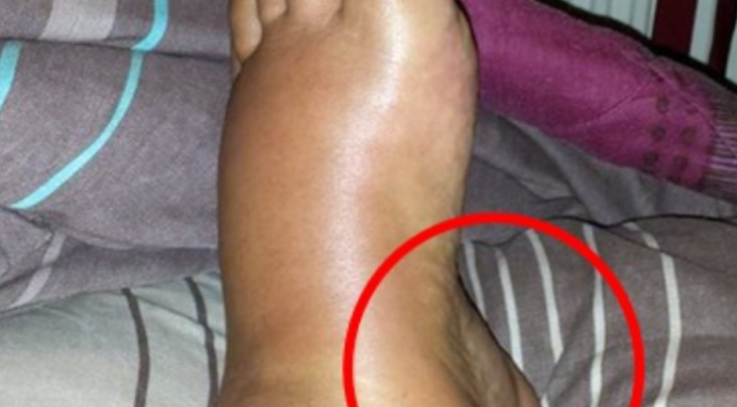
Swollen feet are a problem that can appear suddenly and is often ignored, although in reality they can be a sign that the body is trying to tell us something.
In practice, this means the accumulation of fluid in the tissues, i.e., edema, which makes the feet noticeably larger, heavier, and less comfortable in everyday life.
Many people notice that the skin in such areas begins to look tight, slightly shiny, and when pressed with a finger, a characteristic indentation remains for a moment.
It also happens that shoes that were previously comfortable suddenly start to feel tight, which is one of the first signs that something is changing.
There can be many causes of this condition and they do not always indicate serious health problems.
Often, prolonged sitting or standing, especially in one position, is to blame, as it hinders proper blood circulation.
In addition, hot weather promotes water retention in the body, and excess salt in the diet intensifies this effect.
In women, swelling may also appear during pregnancy, which is a natural phenomenon related to hormonal changes and increased stress on the body.
However, it should not always be ignored, as in some cases swelling may be related to circulatory problems, heart, kidney or liver disease.
Some medications can also cause fluid retention, as can injuries or inflammation.
There are situations in which it is not worth delaying a visit to the doctor.
If swelling appears suddenly, affects only one foot, or is accompanied by pain, redness, or a feeling of warmth, it may be a sign of a more serious problem.
Special attention should also be paid if swelling occurs together with shortness of breath or chest pain.
In many cases, however, you can try to alleviate the symptoms naturally by supporting the body with gentle methods.
Herbs have been used for centuries to improve circulation and reduce inflammation, so they can also be helpful for swollen feet.
One of the most frequently recommended is ginkgo biloba, which supports blood flow and helps dilate blood vessels, which helps reduce swelling.
Calendula is equally effective, known for its anti-inflammatory properties, and can be used both in the form of infusions for foot soaks and in the form of ointments.
It is also worth paying attention to butcher’s broom, which strengthens blood vessels and improves their elasticity, which is especially important in cases of circulatory problems.
Chamomile, on the other hand, has a soothing and relaxing effect, so foot baths with it can bring not only physical but also mental relief.
Don’t forget about ginger, which stimulates circulation and has anti-inflammatory properties, as well as witch hazel, which helps reduce swelling thanks to its astringent properties.
Horse chestnut is another plant often used for vein problems, as it supports their condition and reduces the feeling of heavy legs.
Dandelion acts as a diuretic, helping the body get rid of excess fluids, which can significantly reduce swelling.
Rosemary and turmeric, in turn, support circulation and reduce inflammation, which further enhances the effect of other methods.
One of the simplest ways to use the properties of herbs is to prepare an infusion, for example from dandelion, which can be used both for drinking and for a foot bath.
Just pour hot water over the dried root, wait a few minutes, and then use the infusion to relax your feet for about 15–20 minutes.
Regular use of such methods can bring relief, especially if the swelling does not have a serious health cause.
However, it is worth remembering that natural methods work gradually and are best used as a support, not as a replacement for treatment.
Therefore, in case of any doubts, chronic symptoms or concomitant diseases, it is always best to consult a doctor.
The body often gives subtle signals before a more serious problem occurs, so it is worth observing them and responding with appropriate attention.