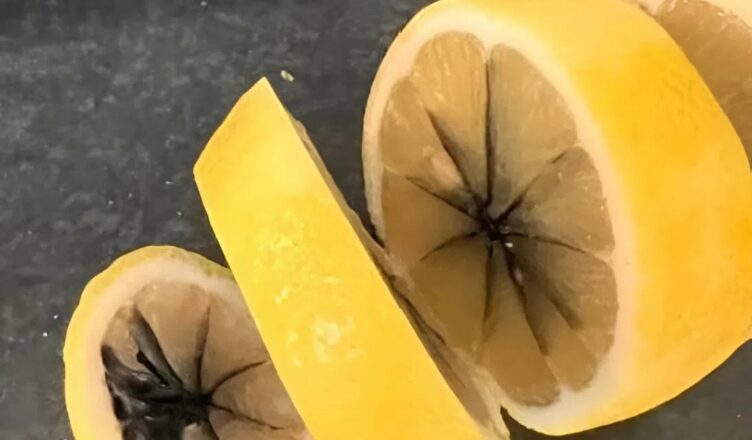
You’re about to make some tea, you cut a lemon, and there it is – surprise.
You see a dark spot in the flesh of the fruit, sometimes star-shaped.
On the outside, everything looks perfect: smooth skin, fresh scent, no signs of spoilage.
Yet there is something hidden inside that cannot be seen with the naked eye.
This is a phenomenon that occurs more often than you might think.
Some lemons, even though they appear fresh, are infected inside by a fungus called Alternaria . This fungus is responsible for the so-called black rot of lemons.
It doesn’t smell bad, it doesn’t change the taste on the outside, but it can completely destroy the inside of the fruit.
Interestingly, it all starts with stress.
Yes, even lemons can suffer from this condition. Prolonged storage, humidity, thermal shock, or slight damage to the peel can be enough to cause the fungus to develop.
Over time, the flesh begins to blacken, forming star-like shapes or dark spots.
This is a process that cannot be seen from the outside.
But is such a lemon dangerous to health?
No, simply touching it is harmless. However, consuming infected flesh is not a good idea.
The Alternaria fungus can produce toxins that irritate the digestive and respiratory systems, especially in sensitive or allergic people.
So it’s better not to take any risks – even if some of the fruit still looks good.
How to avoid such a situation?
Choose lemons with uniform, firm skin. Avoid those with brown spots, soft areas, or damage.
Store them in a cool, dry place, but not in a too humid refrigerator.
And above all, don’t wait weeks to use them. It’s best to use them within a few days of purchase.
If you notice a dark interior after cutting, do not attempt to cut out the healthy parts.
The fungus may have already spread further, although it is not visible.
The safest thing to do is simply throw away the fruit and check if others stored nearby have similar signs.
Alternaria is not a tragedy, but it requires vigilance.
So before you drop a lemon slice into your hot tea, take a moment to see what’s inside.
It’s a small gesture that can save you from an unpleasant surprise.