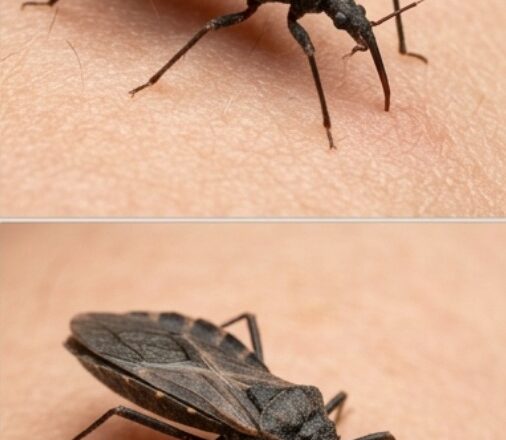
Not all insects that appear in the house are as harmless as they might seem at first glance, so sometimes it’s worth taking a closer look at them and knowing when to react.
We usually treat them as a minor inconvenience, something that is simply irritating but does not pose a major threat to our daily lives.
A small insect at the window or flying across the room often does not arouse any suspicion and is forgotten after a while.
However, there are cases in which such indifference may prove to be a mistake, as some species require quick recognition and appropriate action.
One such insect is the Triatomidae family of bugs, which, although not widely known, can appear in homes, especially in warmer regions.
It is an insect that leads a rather secretive lifestyle and chooses dark, quiet and difficult to access places where it can remain unnoticed for a long time.
It most often hides in wall crevices, behind furniture, under mattresses or in other quiet nooks and crannies that are rarely thoroughly inspected.
Its activity occurs mainly at night, which means that it operates when household members are asleep and its presence can only be detected after some time.
That’s why it’s so important to know what it looks like and where to find it, as a quick response can prevent it from spreading.
It is characterized by an elongated, dark-colored body, often with reddish or orange elements, and its slender silhouette and long antennae distinguish it from other insects.
Although it somewhat resembles a classic bedbug, it is more elongated and moves slower, preferring quiet and shaded places.
It can be found in various parts of the house, especially in quiet places and lacking light, such as behind furniture, under mattresses, in attics or basements.
If you come across an insect with such characteristics, it is worth being careful and not taking hasty actions.
It should not be touched or crushed with bare hands as it is safer to use a container to catch it without contact.
Then it is best to consult a specialist who will help you identify the insect and assess whether there are more of them in your home.
It is also worth carefully checking the surrounding area, paying attention to cracks in the walls, places behind furniture and other nooks and crannies that may be hiding places.
This quick inspection can help prevent insects from settling in for longer and becoming more difficult to remove.
However, the best solution remains prevention, as a few simple actions can significantly reduce the risk of their occurrence.
Sealing gaps, installing window screens, keeping things tidy and regularly cleaning hard-to-reach places are basic steps that can prove very effective.
It is equally important to check used furniture and items before bringing them into your home, as they may be the unknowing source of the problem.
Many people ignore a single insect, assuming it’s a coincidence, but sometimes it can be a sign that there are more nearby.
Therefore, it is crucial to remain vigilant and react in time before the situation becomes more serious.
It’s not about living in constant fear, but about being aware and knowing what to do when necessary.
Because very often it is small actions and a quick reaction that help keep your home safe and peaceful.