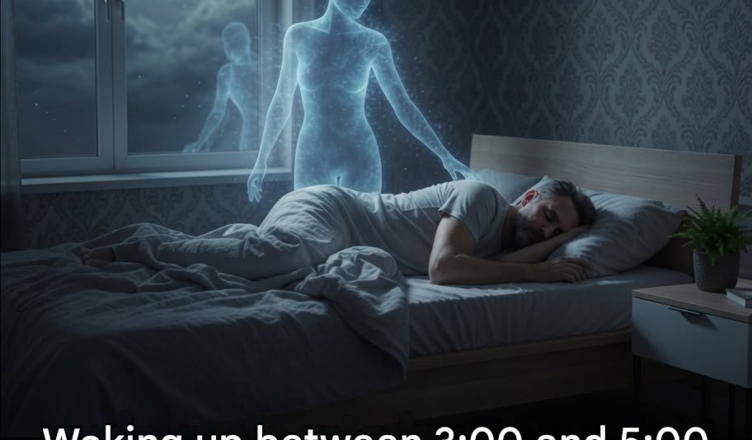
Getting a good night’s sleep without a single wake-up call seems surprisingly rare, but it’s actually essential if you want to be fully productive—and not feel tired—the next day.
Many people believe that simply going to bed at the right time guarantees a good night’s sleep , and then they wake up – most often – between 3 and 5 a.m.
This can sometimes cause problems, especially if the person has difficulty falling back asleep.
The Hour of the Wolf: Between Science and Mysticism
The fact that most people wake up during this period is neither a coincidence nor a sign of bad luck. It turns out that this tendency has its own significance…
The hours between 3:00 and 5:00 a.m. are sometimes called the hour of the wolf, after the psychological horror film of the same name by Swedish film director Ingmar Bergman.
“The hour between night and dawn… when most people die, when sleep is deepest, when nightmares are most real. It’s the hour when insomniacs are tormented by their worst fears, when ghosts and demons are most powerful. The hour of the wolf is also the hour when most babies are born,” Bergman explains.
According to Professor Birgitta Steene, the title comes from Swedish folklore, in which the “hour of the wolf” refers to the period between 3:00 and 5:00 in the morning.
A time ripe for fears and ghosts?
This period is associated with a higher number of deaths and births. It is at this point that the body often enters a phase of deepest rest, which explains why bodily functions can be so impaired during this period.
In folk traditions, the witching hour, also known as the devil’s hour, is a nocturnal period associated with supernatural phenomena. It is believed that during this time, witches, demons, and spirits manifest and exert their greatest influence.
The Hour of the Wolf : What Science Says About Those Nighttime Awakenings
For those who sleep normally, the wolf hour represents the period of deepest sleep. For those who wake up, however, it is said to be the time when feelings of anxiety are at their strongest.
The body’s circadian rhythm (the 24-hour cycle of physiological processes) normally aligns with sunrise and sunset, which means that body temperature , blood pressure , and metabolism drop at night.
Around 4 a.m., energy levels are at their lowest because that’s when the body enters its natural resting phase. However, if you’re feeling anxious, this is when your emotions can become more intense, causing you to wake up.