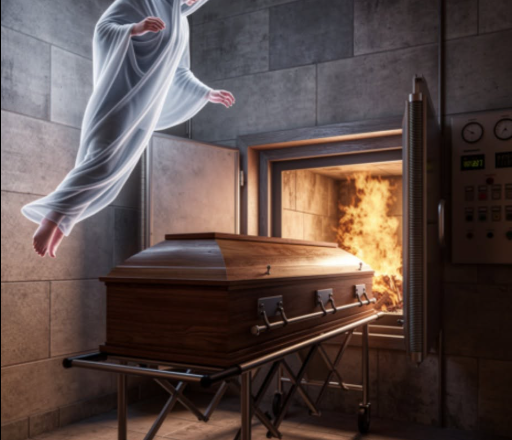
Is Cremation a Sin? Understanding the Christian Perspective.
An Engaging Introduction.
In recent decades, cremation has become increasingly common around the world. Rising burial costs, limited cemetery space, environmental concerns, and changing cultural traditions have all contributed to its growing popularity. However, for many Christians, the topic remains deeply personal and often raises important spiritual issues.
Many believers wonder whether cremation is consistent with their faith. Some fear that cremation might somehow interfere with God’s resurrection plan, while others question whether cremation offers the same respect to the body as traditional burial. These concerns are understandable, as Christians view the human body as a sacred creation of God.
I remember sitting in the hospital waiting room with my aunt after my uncle died. She was distraught—not only from the grief but also from the decision she had to make. “He didn’t tell me what he wanted,” she whispered. “And I don’t know what’s right.”
She was torn between her family’s burial tradition and her belief that cremation would be simpler, cheaper, and more practical. But she was also afraid. A well-meaning relative told her that cremation was “against God’s will.”
She wasn’t the only one who felt lost.
Let me tell you what the Bible actually says about cremation and what different Christian traditions teach.
First, what does the Bible actually say about cremation?
The short answer is: the Bible does not explicitly prohibit cremation.
There is no verse that says, “You shall not cremate.” There is no commandment forbidding it. There is no prophecy condemning the practice.
The Bible contains many burial accounts. Abraham buried Sarah (Genesis 23). Jacob requested burial in the family tomb (Genesis 49). Joseph was embalmed and buried (Genesis 50). Jesus was buried in a tomb (Matthew 27).
Burial was the norm in ancient Israel and the early Christian Church. However, the Bible does not mandate burial. It describes it as a customary practice, not a divine requirement.
Important: The absence of a command does not equate to prohibition. Just because the Bible describes burial does not mean that cremation is forbidden.
What about passages that mention fire? Some Christians point to biblical passages that associate God’s judgment with fire (e.g., the burning of Sodom and Gomorrah, or the “lake of fire” in Revelation). They argue that cremation “imitates” this judgment and is therefore inappropriate for believers.
However, most biblical scholars reject this interpretation. The fire of judgment symbolizes spiritual destruction, not a literal prohibition against cremation. The Bible also describes fire as a form of purification and sacrifice—neither of which has anything to do with judgment of the dead.
To read these passages as a prohibition of cremation is to look for something in the text that is not there.
The question of resurrection (does cremation affect it?)
This is the most common fear. Will God be able to resurrect a body that has been cremated?
The answer is yes.
Throughout history, countless Christians have died in ways that destroyed their bodies—martyrs burned at the stake, soldiers blown to pieces by explosives, victims of fires and earthquakes. Their resurrection is beyond doubt. The state of the remains does not limit God.
Theological Argument: The resurrection of the body is an act of God’s power, independent of the preservation of physical remains. Whether the body is buried, cremated, or lost at sea, it will rise again.
As the Apostle Paul wrote, “For the body is sown in corruption, it is raised in imperishability” (1 Corinthians 15:42). He wasn’t talking about burial or cremation. He was talking about a transformation from the earthly to the heavenly.
What do the main Christian denominations teach?
Let me present this in keeping with tradition.
| Term | Position on cremation | Notes |
|---|---|---|
| Roman Catholic | Allowed (since 1963) | Previously prohibited (1886-1963). The Church prefers burial but permits cremation, provided it is not chosen for anti-Christian reasons. The ashes must be kept in a sacred place (church, columbarium, or cemetery)—they cannot be scattered or kept at home. |
| Eastern Orthodox | Generally discouraged, but not prohibited | The Church strongly favors burial, demonstrating respect for the body. However, cremation is not considered a sin, and many Orthodox Christians today choose it. |
| Protestant (mainstream) | Generally permitted | Most major denominations (Lutheran, Methodist, Presbyterian, Episcopalian) have no official ban. Individual churches may have their own preferences, but cremation is widely accepted. |
| Evangelical / Non-denominational | Differently | There is no central authority. Some churches discourage cremation, others permit it. Most emphasize that the resurrection of the body is an act of God and does not depend on the condition of the remains. |
| Mormons (Latter-day Saints) | Allowed | The Church of Jesus Christ of Latter-day Saints allows cremation but prefers burial when possible. |
Trend: Most Christian denominations have begun to allow cremation. The Roman Catholic Church reversed its position in 1963. Mainstream Protestants have long allowed it. Evangelicals are divided but increasingly tolerant.
Is cremation a sin?
Let me answer you directly.
Cremation is not a sin. The Bible does not prohibit it. It does not threaten the resurrection. Most Christian denominations permit it.
Some Christians, however, choose burial out of respect for tradition, a desire to follow biblical examples, or because the physical act of burial brings them solace.
None of these choices are wrong. None of them are sinful. None of them affect your salvation or resurrection.
What matters is the state of the soul, not the state of the body.
Practical considerations (for those choosing cremation)
If you choose cremation, here are some things to consider:
- Discuss your wishes with your family. Make sure they know what you want.
- Consider the issue of burial of ashes. Some churches require burial or placement of ashes in a columbarium. Many traditions discourage scattering ashes.
- Respect the beliefs of loved ones. If your family has strong beliefs about burial, speak honestly with them.
Frequently asked questions
Is cremation a sin in Christianity?
No. The Bible does not prohibit cremation. Most Christian denominations allow it.
Will cremation affect my resurrection?
No. The resurrection of the body is an act of God’s power, independent of the physical condition of the remains.
Can a cremated person be buried in a Catholic cemetery?
Yes. The ashes must be placed in a consecrated vessel (urn) and interred in a cemetery, columbarium, or mausoleum. Scattering of the ashes is prohibited.
Can I keep a loved one’s ashes at home?
Catholic teaching says no. In many Protestant churches, yes. Consult your religious leader.
What if my family is divided?
That’s difficult. Try to respect the deceased’s known wishes. If they didn’t express a preference, prioritize the values they held dear.
A final word full of compassion
Here’s what I want you to take away from this article.
Cremation is not a sin. It is not a rejection of God’s plan. It does not pose a threat to the resurrection.
This is a practical choice made by millions of faithful Christians around the world.
God, who created the universe out of nothing, can certainly resurrect a body that has been cremated.
So if you choose cremation, do it without fear. If you choose burial, do it without judgment.
Either way, the love you leave behind is far more important than what happens to your body.
Now I’d love to hear your thoughts. Did you struggle with this decision? What does your religious tradition teach? What have you chosen for yourself or a loved one? Leave a comment below—I’ve read every single one.
And if this article has shed some light on your situation, please share it with someone who needs to hear it. Through text, link, or conversation. Good information is the best gift.