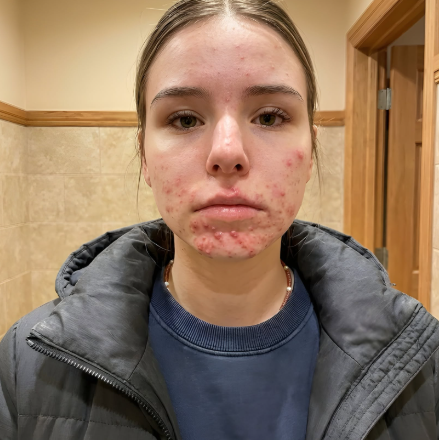
Many people believe that acne is a phase that ends with youth, so its return in adulthood can be not only a surprise but also a source of frustration and misunderstanding.
Suddenly appearing breakouts, especially around the chin and jawline, seem more persistent, harder to control, and much more resistant to previously known skincare methods.
This makes many people look for the cause in cosmetics or daily hygiene, when the problem often lies much deeper.
Adult acne is not accidental and is rarely caused solely by “problem skin,” as is often simplified.
Most often, its source is inside the body, and the skin is only the place where these changes begin to become visible.
One of the main factors responsible for chin pimples are hormones, which can fluctuate even in adulthood and affect the functioning of the entire body.
These can cause increased sebum production, which clogs pores and leads to inflammation, especially in the lower part of the face.
In women, such changes often occur cyclically, at specific times of the month, but they may also be associated with larger hormonal changes, such as menopause or discontinuation of contraception.
In men, this process is usually slower, but with age, hormonal imbalances also occur, which may manifest themselves through skin problems.
Another factor that is often overlooked is stress, which does not always have to be felt in an obvious way to affect the body.
Everyday tension, responsibilities, pressure and fatigue cause an increase in cortisol levels, the stress hormone, which directly affects the skin.
As a result, sebum production increases, which leads to the formation of further pimples, often in exactly the same places.
Diet also plays a much bigger role than many people realize, because what we eat has a direct impact on our hormonal balance and the condition of our skin.
Products with a high glycemic index, excess sugar, processed foods and large amounts of dairy products can aggravate skin problems and promote inflammation.
Changing your eating habits won’t produce results overnight, but in the long run it can significantly improve your skin’s appearance and reduce acne flare-ups.
We also cannot forget about the care itself, which – although it is supposed to help – can sometimes make the situation worse, especially if it is too aggressive.
Too frequent cleansing, using harsh cosmetics or constantly changing products can disrupt the skin’s natural protective barrier, leading to even more sebum production.
For adult skin, simplicity and gentleness work much better, helping to restore balance rather than disturbing it.
Another often overlooked aspect is hair products that come into contact with the face and can clog pores, especially around the chin and jawline.
Contact with a phone, pillow or hands has a similar effect, carrying bacteria and contaminants, contributing to the deterioration of the skin.
Sometimes, however, persistent acne can be a sign of a deeper health problem, so in the case of long-term or severe changes, it is worth consulting a specialist.
A dermatologist can help not only choose the right treatment, but also indicate whether the cause is hormonal disorders or other conditions.
The most important thing, however, is to understand that adult acne is not a cause for shame or a sign of neglect.
It is a natural reaction of the body to various factors that are often beyond our direct control.
Instead of looking for quick solutions, it is worth focusing on patience, consistency and gradual changes, which bring the best results over time.
Because while acne can be bothersome, understanding it gives you a real chance to improve and regain control over your skin.