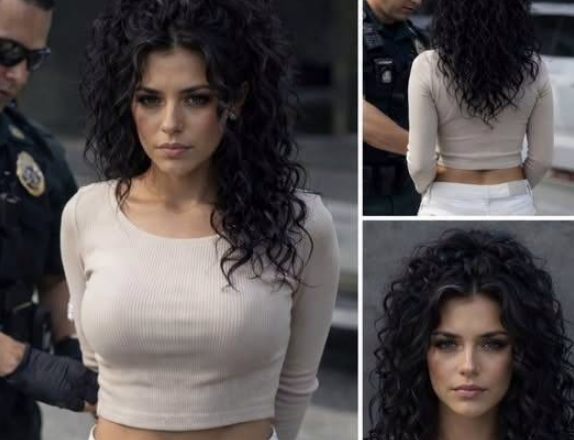
It began as a quiet, unremarkable Saturday in our suburban neighborhood—the kind of place where the only thing that usually happens is a neighbor trimming their hedges too early in the morning. But in the span of sixty seconds, everything changed.
A single, misunderstood moment in a public park was captured on camera, edited into a short, inflammatory clip, and unleashed upon the internet.
By nightfall, the person involved, a soft-spoken individual we had known for years, was the target of global vitriol.
What started as a local curiosity exploded into a digital manhunt that proved one terrifying truth: privacy is a relic of the past, and one viral video can destroy a life before the truth even has a chance to catch up.
The incident itself was deceptively simple. Our neighbor, someone known more for their reserved nature and polite waves than for causing a scene, was seen in a public space acting in a way that, when viewed through a narrow lens, appeared erratic and strange. To those of us actually present in the neighborhood, the context was clear: a moment of overwhelming stress, a sudden personal crisis, or perhaps just a human reaction to a bad day. We saw a person we knew. But to the thousands of strangers who would soon be commenting on the video, they didn’t see a person; they saw a caricature. They saw a villain in a tragedy they were invited to participate in, all from the comfort of their own screens.
Within hours, the clip had jumped from local social media pages to national platforms. The speed at which it spread was dizzying, stripping away the humanity of the event as it traveled. Context, as it always does in the digital age, was the first casualty. The preceding events, the environmental factors, and the personal struggles that might have provided a shred of empathy were discarded. The internet doesn’t like nuance; it likes binary outcomes. It likes to label, to judge, and to share. As the video migrated from feed to feed, the “truth” of what happened became less important than the “story” that people wanted to tell. And once that narrative took hold, the person involved lost all control over their own identity.
The reactions were immediate, polarized, and deeply uncomfortable to witness. On one side, you had the moral crusaders, people who had never set foot in our zip code, suddenly holding forth on the decline of public decency and demanding accountability for behavior they didn’t fully comprehend. On the other side, the conversation shifted to the ethics of the recording itself. Was it right to film someone in their most vulnerable state? Is the public square truly a place where we surrender the right to be human, to make mistakes, or to have a private breakdown? This incident reignited a larger, much uglier tension: the invisible war between our right to visibility and our inherent need for dignity.
When we reduce a human life to a twelve-second loop, we aren’t just sharing an event—we are participating in a deconstruction of that person. We fill in the blanks with our own biases, our own bad moods, and our own cynicism. We assume the worst because it’s easier than imagining that we might be seeing a fellow human being at their absolute lowest point. The distance provided by the screen acts as a buffer, muting our conscience and amplifying our urge to participate in the collective outrage. We forget that behind every viral clip is a person who has to wake up the next morning, go to the grocery store, and live with the fallout of a moment that wasn’t meant to define them.
In our neighborhood, the response was jarringly different. Here, we saw the video, but we also saw the human. We saw the person who brings in the neighbor’s trash cans when they’re away, the person who plants flowers for the community to enjoy. There was a quiet, heavy restraint among us. We weren’t rushing to define what had happened or demanding a public apology. We were waiting, giving space for the dust to settle, and offering the benefit of the doubt—something that seems entirely absent in the digital landscape. That space is the foundation of community. It is the acknowledgement that we are all fallible, all capable of being caught in a bad light, and all deserving of the mercy we would hope for if the camera had been pointed at us.
The weight of being seen without choosing to be is perhaps the most profound burden of our era. Public spaces are, by their very design, visible, but there is a vast, fundamental difference between being witnessed by a neighbor and being broadcast to the world. Scale changes the nature of the event. A moment witnessed by three people is a life event; a moment shared with three million is an execution of reputation. The digital footprint we leave is supposed to be about our choices, but in the age of the ubiquitous smartphone, it has become a record of our involuntary exposure. Once that footage is uploaded, it becomes a permanent part of the internet’s vast, unforgetting memory, carried forward indefinitely, often long after the person involved has moved on.
We are living through a grand social experiment where we have the tools to share everything but have lost the wisdom to know what is worth amplifying. Not every bizarre interaction needs to become a morality play. Not every painful lapse in judgment needs to be recorded, tagged, and distributed. As we navigate this increasingly connected world, we have to start asking ourselves why we feel compelled to share, who we are hurting in the process, and whether we are contributing to a culture of empathy or a culture of cruelty.
At the end of the day, we are all just a few seconds of bad footage away from becoming the next “story” in someone else’s news feed. Choosing to pause, to look away, or to offer the grace of privacy is not a sign of weakness; it is a sign of profound human responsibility. Behind every screen, behind every pixelated face, there is a complex, struggling human being who deserves to be more than just a viral moment. We need to be the guardians of our own humanity, resisting the urge to turn every public struggle into a public spectacle. Because, as our neighbor eventually learned the hard way, some moments are meant to be lived, not watched, and once the red recording light goes off, the damage done to a human spirit can rarely be undone.