Why You Sometimes Find Red or Brown Spots Inside Eggs (And What They Really Mean)
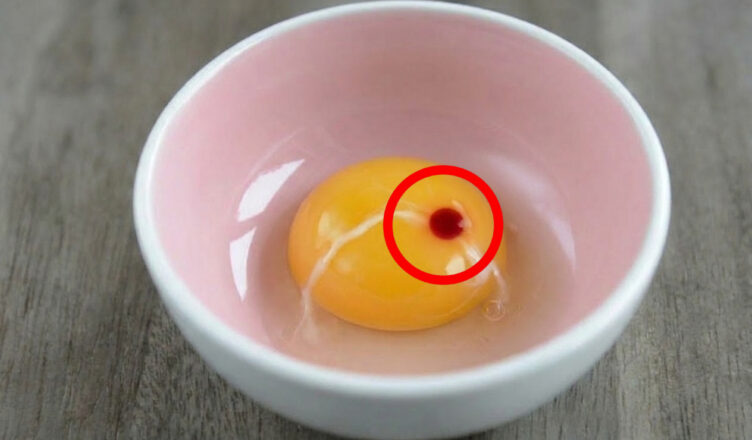
Many people are surprised or even slightly concerned when they crack open an egg and notice a small red or brown spot inside. At first glance, it can look unusual or even alarming, especially if you’ve never seen it before. However, in almost all cases, these spots are completely natural and harmless.
Understanding what these spots are—and what they are not—can help remove confusion and prevent unnecessary food waste.
What Are the Red or Brown Spots in Eggs?
The small red or brown spots sometimes found inside eggs are commonly known as blood spots or meat spots.
Blood Spots
Blood spots occur when a tiny blood vessel ruptures in the hen’s ovary or oviduct during the egg formation process. When this happens, a small amount of blood becomes trapped in the egg white or yolk before the shell forms around it.
Meat Spots
Meat spots are slightly different. These are small bits of reproductive tissue from the hen that accidentally end up inside the egg during its development. Despite the name, they are not “meat” in the sense of muscle tissue, and they are also harmless.
Both blood spots and meat spots are natural byproducts of egg production and do not indicate that anything is wrong with the egg.
Do These Spots Mean the Egg Is Fertilized?
One of the most common misconceptions is that a red or brown spot inside an egg means it has been fertilized or contains a developing embryo. This is not true.
Most eggs available in supermarkets come from hens that have never been in contact with a rooster, which means fertilization cannot occur. Without fertilization, no embryo can form, regardless of whether a spot is present.
Even in rare cases where eggs are fertilized, proper refrigeration prevents any development from occurring.
So, seeing a red spot is not a sign of fertilization—it is simply a natural variation in egg formation.
Are Eggs With Blood Spots Safe to Eat?
In the vast majority of cases, eggs that contain small blood or meat spots are perfectly safe to eat. These spots do not affect the taste, nutritional value, or quality of the egg.
Many commercial egg producers even use special candling processes (shining a bright light through the egg) to detect and remove eggs with visible spots before they reach stores. However, some still make it through the sorting process, which is why you may occasionally see one.
If you find a spot and it bothers you visually, you can easily remove it with a spoon or the tip of a knife before cooking. The rest of the egg is completely fine to use.
When Should You NOT Eat an Egg?
While blood or meat spots are harmless, there are other signs that may indicate an egg is no longer safe to consume. You should discard an egg if you notice any of the following:
- A strong, unpleasant or sulfur-like smell when cracked open
- A slimy or unusually thick texture
- Unusual discoloration such as green, pink, or gray tones
- A heavily cracked or leaking shell before use
These signs are more likely to indicate spoilage or bacterial contamination, and the egg should not be eaten.
Why Do Blood Spots Happen More Sometimes Than Others?
The occurrence of blood spots can depend on several natural factors related to the hen, including:
- The hen’s age (younger hens tend to produce more spots)
- Stress or changes in environment
- Genetic factors
- Natural variation in the egg-laying process
Even under ideal farming conditions, a small percentage of eggs may still contain these spots. It is a normal part of egg production and not a sign of poor quality control.
Can You Prevent Blood Spots in Eggs?
From a consumer standpoint, there is no need to prevent them. They are not harmful and do not indicate a problem with the egg itself.
From a production standpoint, farmers and egg producers already work to reduce their occurrence through careful breeding and egg inspection processes. However, eliminating them completely is not possible because they are a natural biological occurrence.
Final Thoughts
Finding a red or brown spot inside an egg can be surprising, especially if you are not expecting it. However, in almost all cases, it is simply a harmless part of the egg’s natural development process.
These spots do not mean the egg is bad, fertilized, or unsafe. They are just small imperfections that occasionally occur in nature.
As long as the egg does not show signs of spoilage—such as a bad smell, unusual color, or strange texture—it is perfectly safe to cook and eat.
So the next time you see a small red speck inside an egg, there’s no need to worry. It’s just a normal part of how eggs are formed.