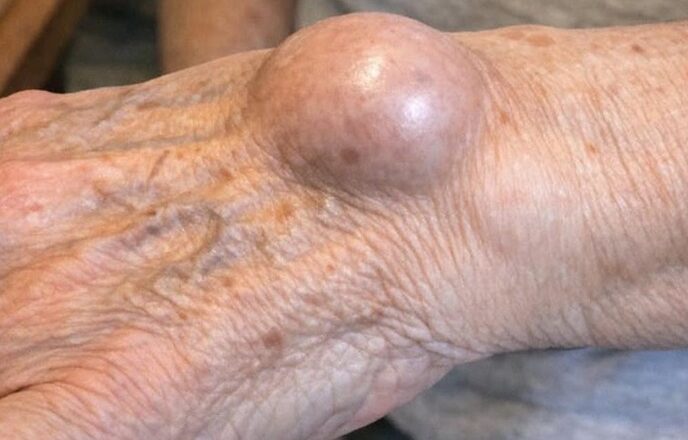
Finding an unfamiliar lump on your wrist can be unsettling.
When a new growth appears unexpectedly, it’s natural to worry about what it might mean for your health.
While it’s easy to fear the worst, the best first step is to stay calm and gather accurate information about the potential cause.
A lump on the wrist can have a variety of causes, from benign cysts to more serious issues. Understanding the range of possibilities helps you decide how to proceed. In this article, we’ll discuss the most common causes of lumps on the wrist—particularly ganglion cysts, which are among the most common—as well as other potential causes and symptoms that require urgent medical attention.
1. Why a sudden lump on your wrist can be alarming
A lump that appears overnight can be particularly concerning because of the rapidity with which it develops. Rapid physical changes sometimes indicate inflammation or fluid buildup, which may signal an underlying problem.
Nodules can vary in size, firmness, and color, and each characteristic provides clues. A hard, solid mass may suggest something different than a soft, fluid-filled swelling. Recognizing these differences helps determine whether the situation requires immediate medical attention.
2. What exactly is a ganglion cyst?
A ganglion cyst is a benign (non-cancerous) swelling that most often forms along the tendons or joints of the wrist or hand. These cysts contain a thick, jelly-like fluid and typically measure 1 to 3 centimeters. They are usually round or oval in shape and may feel firm or slightly rubbery to the touch.
Experts believe that ganglion cysts form when synovial fluid leaks from a joint or tendon sheath and accumulates in a sac. Although the exact cause is not fully understood, they are more common in women and often occur in adults between the ages of 20 and 40.
3. Classic symptoms indicating a ganglionic cyst
Ganglion cysts typically appear as a noticeable lump on the wrist or hand, which may grow or shrink over time. They are often painless, but they can cause discomfort if the cyst presses on nearby nerves or joints. The skin over the cyst usually appears smooth, and the lump may move slightly under the skin.
Sometimes, a cyst limits joint movement or causes a dull ache, especially if it’s located near the wrist joint. It can also increase in size after repetitive activity involving that joint.
4. Other possible causes of a new wrist lump
Although ganglion cysts are the most common cause of wrist lumps, other causes are also possible. Lipomas—soft, fatty growths under the skin—are usually harmless. Bone spurs, which are bony protrusions associated with arthritis or joint degeneration, can also cause a lump-like sensation.
Less commonly, the nodule may be a rheumatoid nodule associated with rheumatoid arthritis or an abscess caused by infection. In rare cases, it may be a tumor, requiring further evaluation.
5. When a lump on your wrist is a medical emergency
Most wrist lumps are not urgent, but some warning signs require immediate attention. Severe pain, redness, fever, or a feeling of warmth may indicate an infection and should be investigated immediately.
Rapid growth, severe pain, or difficulty moving the hand or wrist also warrant urgent evaluation. Sudden numbness or loss of hand mobility is particularly concerning and should not be ignored.
6. How Doctors Diagnose a Suspicious Wrist Lump
Your doctor will usually begin with a physical examination, assessing the size, texture, and location of the tumor. Imaging tests, such as X-rays, ultrasound, or MRI, may be used to better understand the tumor and its relationship to surrounding tissues.
In some cases, the doctor may perform aspiration, drawing fluid from the lump with a needle. Clear, jelly-like fluid usually confirms the presence of a ganglion cyst. If there are doubts, a biopsy may be performed for more detailed tissue analysis.
7. Treatment Options: From Close Monitoring to Surgery
Treatment depends on the cause and stage of the tumor. In the case of ganglion cysts, doctors often recommend observation, as some cysts disappear spontaneously. If symptoms occur, aspiration can relieve pressure by removing fluid.
If cysts persist or recur, surgical removal is recommended. This procedure involves removing both the cyst and its connection to the joint. The surgery is typically performed on an outpatient basis and has a short recovery period, although recurrence is possible.
8. Home care, splints and what not to do
For benign lumps, such as ganglion cysts, certain home remedies can alleviate discomfort. Wearing a wrist brace can restrict movement and reduce irritation, especially if a nerve is involved.
Avoid trying to puncture or press on the cyst at home, as this increases the risk of infection. Ice packs can help reduce swelling, and over-the-counter pain relievers can ease discomfort – but it’s best to consult your doctor before trying these methods.
9. Is it possible? Relapse and long-term prognosis
Ganglion cysts sometimes recur, even after surgery. Studies suggest that the recurrence rate may be as high as 30%, depending on factors such as location and whether the cyst’s connection to the joint was completely removed.
Despite this possibility, the long-term prognosis is generally positive. Most benign wrist lumps are not dangerous and can be treated effectively with appropriate care and monitoring.
10. Key questions to ask during your clinic visit
During the meeting you can ask the following questions:
What is the most likely cause of this lump?
Are additional tests necessary to confirm the diagnosis?
What treatment options are available and what are their advantages and disadvantages?
What symptoms require immediate medical attention?
What steps can we take at home to deal with discomfort?
These questions can help you and your grandmother understand the situation and make informed decisions about next steps.