During renovations, some homeowners expect to find old wiring or insulation defects.
This family, however, experienced something much more surprising.
After hearing unusual sounds coming from the walls , they thought they were dealing with a classic pest problem.
The reality turned out to be quite dramatic.
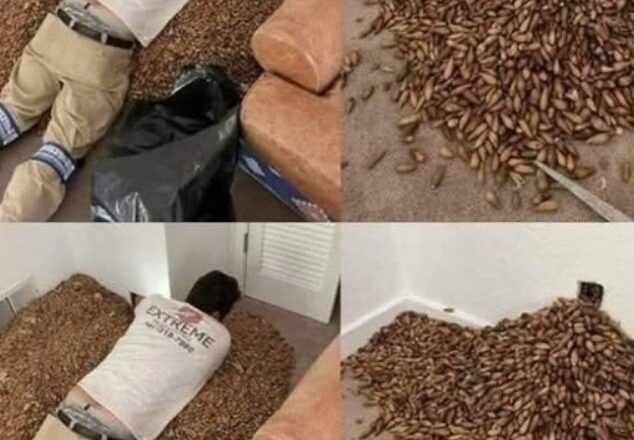
Behind the partitions, experts discovered over 300 kilograms of acorns. An impressive accumulation, gradually gathered by the birds through openings in the attic and chimney.
This story highlights a key point: wild animals can turn a home into a veritable food reservoir, without its inhabitants even realizing it.
Suspicious sounds that hide a spectacular accumulation
It all started with strange sounds. A family was in the middle of renovating when they heard scratching and movement in the walls. They quickly suspected the presence of mice or small rodents.
As a precaution, she contacted a pest control company . Technicians inspected the building and quickly realized the situation was unusual.
Instead of rodents, they discovered a compact mass filling several cavities in the walls. After opening the compartments, they found an impressive number of acorns. The total weight exceeded 300 kilograms.
The birds used the attic opening, as well as access near the chimney, to transport the nuts daily to store them in the house’s crawl spaces.
This behavior is natural. Some species, such as woodpeckers and jays, create winter roosts, hiding food in wooden holes or openings. In this particular case, the building’s design provided the ideal space.
For the residents, this was a complete surprise. This accumulation can cause a number of problems. The weight exerts pressure on the structures. Over time, moisture can also build up. Finally, the noises are becoming more frequent as birds continue to fly in and out.
Why do birds gather acorns in their homes?
Birds employ a simple strategy: they anticipate periods of scarcity. In the fall, they gather seeds, nuts, and acorns. They then hide them in various locations. This method increases their chances of finding food in the winter.
Sometimes buildings offer ideal conditions. Wall cavities remain dry, protected from wind and predators. A small opening is all that’s needed for entry. Once the birds become accustomed to the opening, they return to the same spot.
Over time, the reserve can grow to a surprisingly large size. Each acorn weighs little, but thousands of trips back and forth eventually completely fill the space.
This situation highlights the importance of monitoring your home’s weathertightness. Openings in the attic, around pipes, or near the roof easily attract local wildlife. Regular inspections minimize the risk.
Homeowners should also be on the lookout for warning signs. Repeated noises coming from the walls, movement in the attic, or the frequent presence of birds on the roof can indicate unusual activity.
When in doubt, it’s best to call in a specialist. They can quickly identify the cause and propose appropriate solutions. Early intervention prevents further, more extensive procedures in the future.
Beyond its uniqueness, this story demonstrates the adaptability of wild animals. They utilize human-made structures as additional resources. For them, a home can sometimes serve as an ideal shelter or food source.
For homeowners, this experience serves as a reminder of a simple principle: a well-maintained building reduces the risk of burglary. Checking access points, securing openings, and inspecting attics help prevent these types of surprises.
In this particular case, renovations revealed an unexpected treasure. Three hundred kilograms of acorns, patiently gathered, testify to the quiet work of nature.