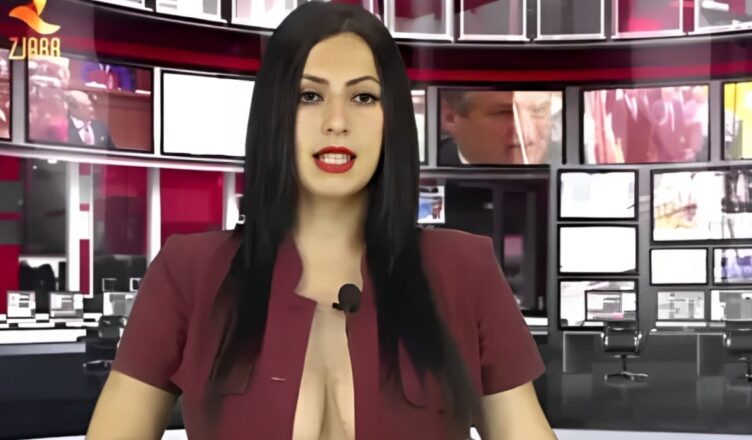
Weather presenters are an integral part of our daily lives, bringing meteorological insights into our homes in an accessible, warm, and engaging way.
Behind their smiles and ease on screen, however, lies a complex mix of science, communication and the ability to build relationships with viewers.
Their role goes far beyond providing predictions—they are storytellers, educators, and sources of comfort in moments of uncertainty.
Let’s take a closer look at how weather forecasters simplify complex data, combine scientific accuracy with personal style, and how their work is evolving in the digital age.
The basis of every weather forecast is a huge amount of data: temperature readings, satellite images, atmospheric pressure analyses and mathematical models.
For the average reader, this information may seem confusing and incomprehensible.
This is where presenters play a key role as science translators who transform this data into actionable and clear predictions.
Collaborating with meteorologists and using advanced technologies allows them to create narratives that are both interesting and useful.
Through graphical presentations such as weather maps, animations, and charts, they convey content in an engaging and easy-to-understand way.
Their goal is to simplify complicated jargon like “isobars” and “dew point pressure” and replace it with more accessible concepts that relate to viewers’ everyday experiences.
The best weather forecasters are not only experts, but also charismatic personalities who can bring even the most predictable forecast to life.
Their ability to combine science with human sensitivity makes viewers feel connected to them.
During their daily broadcasts, they weave in anecdotes, reference current events, or interact with other presenters.
In extreme situations, such as storms, hurricanes or heat waves, they can change their tone to a more serious and supportive one, demonstrating their emotional intelligence.
Their authenticity and commitment build trust, which is especially important in difficult times.
In crisis situations, such as impending natural disasters, weather forecasters become key figures in crisis communications.
Clear messaging, precise instructions, and a calm on-screen presence help ease community anxiety and provide life-saving information.
Their work in moments like these demonstrates that they are not only informants but also opinion leaders who help viewers navigate difficult experiences.
Through it all, they must maintain a balance between urgency and a reassuring message.
In the age of weather apps and forecasts available at our fingertips, the role of newscasters has had to change.
Many of them actively use social media, where they engage viewers through interactive sessions, live broadcasts, and behind-the-scenes content.
Their presence in these spaces allows for a more personalized interaction that is difficult to achieve through technology alone.
Additionally, they are increasingly involved in educating about climate change, explaining its impact on everyday life.
Thanks to their communication skills, they can present even the most complex issues in a simple way, increasing public awareness.
Thanks to their work, weather presenters have become not only experts in their field, but also recognizable figures in popular culture.
Some of them, like Al Roker in the United States or regional television stars, have gained recognition for their distinctive styles or humorous moments on air.
Their contributions to the media go beyond the daily forecast. They become part of our reality, helping us better understand the world around us and prepare for the challenges nature throws at us.
The role of weather presenters continues to evolve, but one thing is certain: their work will remain irreplaceable, regardless of technological advances.