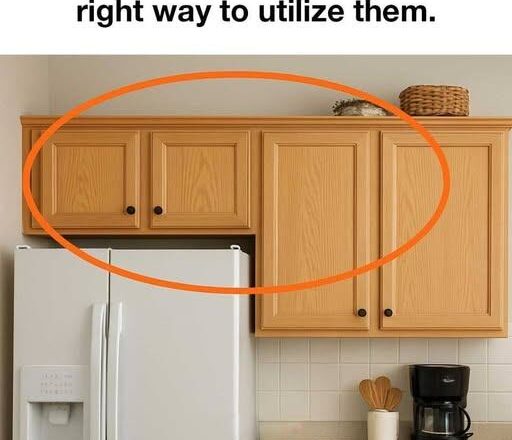
In many homes, certain cupboards are easy to ignore. These are often the cabinets placed in awkward or hard-to-reach spots, such as those above the refrigerator or tucked deep into kitchen corners. Because they are less convenient, many people leave them underused or treat them as wasted space. With the right approach, however, these overlooked areas can become some of the most practical storage spots in the home.
Making better use of every cupboard can help reduce clutter, improve organization, and make daily routines easier. Instead of focusing only on the most visible storage areas, it helps to rethink the spaces that usually go unnoticed. Once these cupboards are used more intentionally, the kitchen and surrounding areas can feel more efficient and far less crowded.
The first step is to understand the shape and size of the cupboard you are working with. Many of these spaces are not ideal for everyday items because they are either too high, too deep, or oddly designed. A cabinet above the fridge, for example, may be shallow in height but deep enough to hold bulky items. Corner cabinets, on the other hand, often have a lot of depth but can be difficult to access. Knowing the dimensions makes it much easier to decide what belongs there and what kind of storage solutions will work best.
One of the smartest ways to use these cupboards is for appliances that are not needed every day. Items such as waffle makers, slow cookers, blenders, roasting pans, or specialty kitchen gadgets can take up too much valuable room in more accessible cabinets. Placing them in harder-to-reach spaces keeps them available without cluttering the areas you use most often. This simple shift can free up room for daily essentials and make the entire kitchen feel more functional.
Storage bins are another effective solution, especially in deep or high cupboards. Grouping similar items together in labeled bins makes it much easier to stay organized. Instead of reaching blindly into the back of a cabinet, you can simply pull out the bin you need. Clear containers make this even easier, since you can see what is inside right away. Bins with handles are especially useful in spaces that are difficult to reach, and stackable options can help you make better use of the height inside the cupboard.
Vertical space is often wasted in many cabinets, yet it can make a major difference when used properly. Adding extra shelves, shelf risers, or under-shelf baskets can instantly create more storage room. Instead of piling items on top of one another, you can divide the space into separate levels and keep things more visible and accessible. Hooks, tension rods, and hanging organizers can also help by using parts of the cupboard that would otherwise remain empty.
These neglected cupboards are also ideal for storing bulk items. Extra pantry goods, canned foods, paper towels, toilet paper, or backup household supplies can all be kept in these less convenient areas. Since these products are not always needed every day, they are well suited for cabinets that are more difficult to access. Organizing them in baskets or containers can prevent the space from becoming messy and makes it easier to keep track of what you already have at home.
Seasonal storage is another excellent use for these forgotten cabinets. Holiday serving dishes, special cookware, baking tools used only a few times a year, or decorations can all be placed in these spaces. This helps keep your main cupboards available for the items you use regularly while still giving those seasonal pieces a proper place. Labels are especially helpful here, since they make it easier to remember where everything is when the time comes to use it again.
Safety should always be part of the plan when organizing hard-to-reach cupboards. Heavy items are best stored lower down whenever possible, since lifting them from high shelves can be risky. If a step stool is needed, it should be stable and easy to position safely. Deep cabinets can also become frustrating if items disappear into the back, so adding pull-out shelves or a rotating tray can make a big difference in convenience and accessibility.
Small creative solutions can transform these spaces even further. The inside of cupboard doors can hold extra storage with pegboards, hooks, or narrow racks. Magnetic strips can keep certain metal items organized, while baskets suspended beneath shelves can add another layer of storage without requiring a full renovation. These adjustments may seem minor, but together they can dramatically improve how much a cupboard can hold.
Choosing the right containers is also important. Square or rectangular containers usually make better use of space than round ones, and clear options reduce the need to open everything just to see what is inside. For food items, airtight containers can help maintain freshness while also keeping the space neater and more uniform. Stackable containers are especially useful because they help maximize height without creating disorder.
Good labeling can make all of this much easier to maintain. When bins, baskets, and containers are clearly marked, everyone in the household can find what they need and return items to the right place. Organizing by category, such as baking supplies, snacks, cleaning products, or bulk goods, also helps prevent clutter from building up again.
One of the biggest mistakes people make is overfilling these cupboards just because they are out of sight. Hidden storage can quickly become chaotic if too many unrelated items are shoved inside. Another common mistake is buying organizers without measuring the space first, which often leads to wasted money and poor use of the cupboard. A little planning before organizing can prevent both problems.
What makes these cupboards so valuable is that they often have far more potential than people realize. The spaces above the refrigerator, in deep corners, or high along kitchen walls may seem inconvenient at first, but they are often perfect for the very items that create clutter elsewhere. And that is the most useful detail of all: the cupboards many people think are the least practical can actually become some of the most effective storage areas in the home when used with intention.