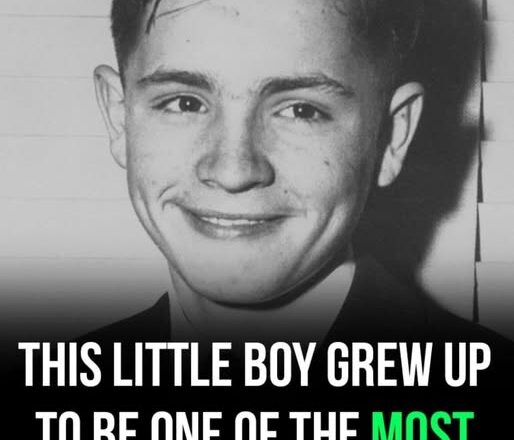
Over the decades, his image has become one of the most infamous in American criminal history — a face that still unsettles, still sparks curiosity, still raises the same question: how does someone become this?
Born in 1934 in Cincinnati to a 16-year-old mother, Manson’s early life was unstable from the start. His father was absent. His mother struggled with alcohol and was later imprisoned for robbery. As a result, he moved between relatives, foster arrangements, and temporary homes.
There were brief moments of structure, but they rarely lasted.
By his preteen years, he was already involved in truancy, petty theft, and other offenses. Reform schools and juvenile detention centers became familiar environments. Instead of correcting behavior, many of those institutions reinforced it. He ran away repeatedly, committed escalating crimes, and developed manipulation skills that would later define his influence.
Psychological reports from his youth described aggressive and antisocial traits. As he grew older, incarceration became routine. Theft, fraud, assault — his early adulthood was marked by repeated convictions. Much of his formative years were spent behind bars.
While imprisoned, Manson studied human behavior, religion, and psychology in his own fragmented way. He developed persuasive speech patterns and a charismatic style that allowed him to command attention.
By the late 1960s, he had gathered a small group of followers who came to be known as the “Manson Family.” He promoted a distorted apocalyptic narrative he called “Helter Skelter,” claiming it predicted a coming race war and positioning himself as a central figure in that imagined conflict.
In August 1969, members of his group committed a series of brutal murders, including the killing of actress Sharon Tate and four others in Los Angeles. The following night, Leno and Rosemary LaBianca were also murdered.
Although Manson did not physically carry out the killings himself, prosecutors argued — successfully — that he orchestrated and directed them. In 1971, he was sentenced to death. When California later invalidated capital punishment, his sentence was commuted to life imprisonment.
He remained incarcerated for decades.
Charles Manson died in prison in 2017.
His name became shorthand for manipulation, cult influence, and the darker edges of charismatic control. Beyond the crimes themselves, his case forced society to confront uncomfortable questions about vulnerability, persuasion, and how fragile individuals can be drawn into destructive belief systems.
The image is widely recognized.
But what makes it unforgettable isn’t just the face — it’s the history attached to it.