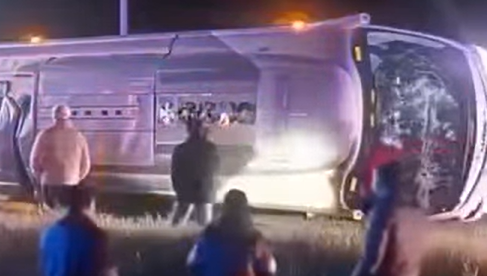
Road accidents are an unfortunate reality of modern transportation, affecting communities across the world regardless of location, infrastructure, or traffic volume. The image above captures the aftermath of a serious nighttime vehicle incident, where a large passenger vehicle lies overturned on its side while emergency responders and bystanders gather nearby. Although the photograph freezes a single moment in time, it tells a broader story about road safety, emergency preparedness, and the human response to unexpected crises.
This article explores the scene depicted in the image, examines what typically happens during such incidents, and discusses broader lessons related to transportation safety, emergency response systems, and community awareness — all from a responsible, factual, and public-interest perspective.
The Scene at a Glance
The photograph shows a large vehicle, likely a bus or transport van, resting on its side along a roadway at night. Emergency lights illuminate the area in shades of blue, purple, and amber, suggesting the presence of police, fire services, or roadside assistance teams. Several individuals are standing at varying distances from the vehicle, observing or assisting, while the surroundings appear to be a roadside verge or grassy shoulder.
The vehicle’s windows are visibly damaged, and its position indicates a significant loss of balance or control prior to coming to rest. Importantly, the image does not show visible injuries, which allows the focus to remain on the response effort rather than on harm or distress.
Nighttime incidents such as this often present additional challenges for emergency services due to reduced visibility, driver fatigue, and lower traffic awareness.
Understanding How Such Accidents Happen
Large vehicle rollovers can occur for many reasons, often involving a combination of factors rather than a single cause. Common contributing elements include:
- Road conditions, such as uneven surfaces, wet pavement, or poorly marked curves
- Mechanical issues, including tire failure or steering problems
- Driver fatigue, especially during nighttime or long-distance travel
- Sudden evasive maneuvers, often taken to avoid obstacles or other vehicles
- Weather conditions, such as fog, rain, or wind
It is important to note that images alone cannot explain the cause of an accident, and responsible reporting avoids speculation. Official investigations are typically conducted by authorities to determine contributing factors and ensure accountability where necessary.
The Role of Emergency Responders
One of the most significant elements in the photo is the presence of people likely involved in emergency response. When a vehicle overturns, time becomes critical. Emergency responders are trained to prioritize several key objectives:
- Securing the scene to prevent secondary accidents
- Assessing occupants for injuries and providing immediate medical care
- Stabilizing the vehicle to avoid further movement
- Managing traffic and ensuring public safety
- Documenting the incident for investigation and insurance purposes
The lighting visible in the image indicates that responders are actively working to make the area visible to other road users, reducing the risk of additional collisions.
Community Presence and Human Response
In addition to official responders, the photo shows several individuals standing nearby. In many accidents, bystanders play a complex role. While curiosity is natural, responsible bystander behavior can make a significant difference.
Helpful actions may include:
- Alerting emergency services if they have not yet arrived
- Providing basic assistance if trained and safe to do so
- Keeping a respectful distance to allow responders to work
On the other hand, overcrowding a scene or recording without purpose can hinder response efforts. Public education on how to react during road emergencies remains an important safety topic.
Vehicle Safety Standards and Design
Modern passenger vehicles, including buses and transport vans, are built to meet strict safety regulations. These may include reinforced frames, shatter-resistant glass, and interior safety features designed to protect occupants during rollovers.
The damaged windows seen in the image likely served a safety function by breaking in a controlled way, reducing the risk of severe injury. While no vehicle can eliminate all risk, continued improvements in design play a critical role in reducing fatalities and serious harm.
Nighttime Driving Risks
Accidents occurring at night are statistically more dangerous than those during daylight hours. Factors contributing to increased risk include:
- Reduced visibility
- Driver fatigue and reduced reaction time
- Impaired depth perception
- Higher likelihood of impaired driving in some regions
The image reinforces the importance of caution when traveling after dark, especially in large vehicles that require longer stopping distances and wider turning angles.
The Importance of Infrastructure
Road design and maintenance also play a crucial role in accident prevention. Proper signage, reflective markers, guardrails, and lighting can significantly reduce the likelihood of rollovers and run-off-road incidents.
Local authorities often use accident data to identify high-risk areas and implement improvements. Incidents like the one shown in the photo may contribute to future safety upgrades that benefit the broader community.
Psychological Impact of Road Accidents
Even when physical injuries are limited, accidents can have lasting psychological effects on drivers, passengers, responders, and witnesses. Feelings of shock, anxiety, and stress are common in the aftermath.
Recognizing this aspect of road safety encourages a more holistic approach, where mental well-being is considered alongside physical recovery. Many regions offer support services for those affected by traffic incidents.
Learning From Incidents Without Sensationalism
One of the challenges in sharing accident-related content online is balancing public interest with responsibility. Sensationalized reporting can lead to misinformation, fear, or exploitation of distressing events.
AdSense-compliant content focuses on:
- Education rather than shock value
- Safety awareness rather than blame
- Respect for those involved
This approach not only meets advertising standards but also contributes positively to public understanding.
Prevention Through Awareness and Training
Preventing similar incidents in the future requires ongoing effort in several areas:
- Driver training, particularly for commercial and large-vehicle operators
- Regular vehicle maintenance
- Public education campaigns on road safety
- Enforcement of traffic laws
Each accident becomes an opportunity to reinforce best practices and improve systems.
The Broader Picture of Road Safety
Globally, road safety remains a major public health concern. Governments, manufacturers, and communities continue to invest in solutions such as advanced driver-assistance systems, smarter infrastructure, and data-driven enforcement.
Images like this one remind us that behind every statistic is a real moment involving real people — a moment that could potentially be avoided through collective responsibility.
Conclusion
The nighttime vehicle accident shown in the photo is a powerful reminder of how quickly ordinary travel can turn into an emergency. While the image captures a static scene, the story behind it includes rapid response, human cooperation, and the ongoing need for road safety awareness.
By focusing on education, preparedness, and responsible reporting, such incidents can serve a constructive purpose — helping communities learn, adapt, and ultimately reduce the likelihood of future accidents.
Road safety is not just the responsibility of drivers or authorities; it is a shared commitment that benefits everyone who uses public roads.