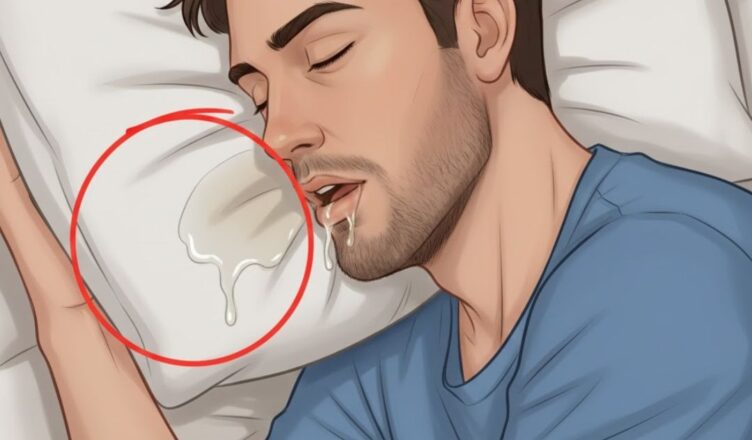
- Parkinson’s Disease
Not due to excess saliva—but impaired swallowing (dysphagia) causes saliva to pool and drip.
Often accompanied by tremors, stiffness, slow movement, or soft speech.
🧠 Note: Drooling can be an early non-motor symptom.
- Cerebral Thrombosis (Stroke Risk)
A blockage in brain blood vessels can weaken throat and facial muscles, especially on one side.
Red flags:
Drooling only on one side
Mouth corner drooping
Slurred speech
Sudden weakness or numbness
🚨 EMERGENCY: These are stroke symptoms—call emergency services immediately.
- Arteriosclerosis (Hardened Arteries)
Reduced blood flow to the brain (from high cholesterol, hypertension, or diabetes) can cause:
Poor muscle tone in the face
Weakened swallowing reflex
One-sided drooling during sleep
Common in middle-aged and older adults with cardiovascular risk factors.
✅ Prevent: Control blood pressure, cholesterol, and blood sugar; quit smoking.
💡 When Is Drooling Normal?
Occasional drooling during deep sleep is usually fine if:
It happens rarely
You sleep on your side or stomach (gravity pulls saliva out)
You have nasal congestion (forcing mouth breathing)
You’re exhausted or stressed (relaxed jaw muscles)
But if it’s new, frequent, one-sided, or paired with other symptoms, don’t ignore it.
✅ What You Should Do
Track your symptoms: Note frequency, side, and any other changes (speech, movement, pain).
See your doctor if drooling is:
Persistent
One-sided
Accompanied by facial weakness, swallowing trouble, or reflux
Get screened for:
Oral health
Neurological function
Cardiovascular risk (BP, cholesterol, glucose)
Improve sleep posture: Try sleeping on your back with head elevated.
The Bottom Line
Drooling isn’t always trivial. In adults, it can be a silent signal from your nervous or vascular system—especially when it’s new, asymmetric, or worsening.
Like Xiao Liang, early detection can prevent catastrophe. Your body speaks in whispers before it screams. Listen closely.
“Health isn’t just about feeling well—it’s about noticing when something’s off.”
Have you or someone you know experienced unusual drooling? Did it lead to a diagnosis? Share your story below—we’re all learning to pay attention together. 🩺💤