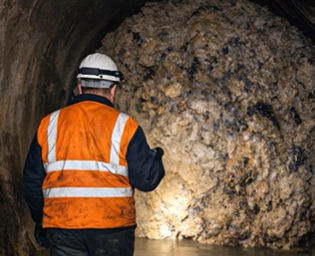
Up above, at first, no one believed us. We spoke incoherently, interrupting each other, trying to explain that something huge and covered with fur was inside the mass of grease.
Someone even joked about a sewer mutant, but after we showed a piece of dark fur, everyone’s mood changed instantly. An hour later, rescuers with heavy equipment and engineers arrived at the site.
We went down again, this time with a large crew. The enormous mass began to be carefully cut apart and lifted out in fragments. Chains rattled in the tunnel, winches creaked, and everyone expected that something alive might appear from the dark mouth of the collector at any moment.
When the massive shapeless figure was finally extracted, the floodlights hit it with bright white light.
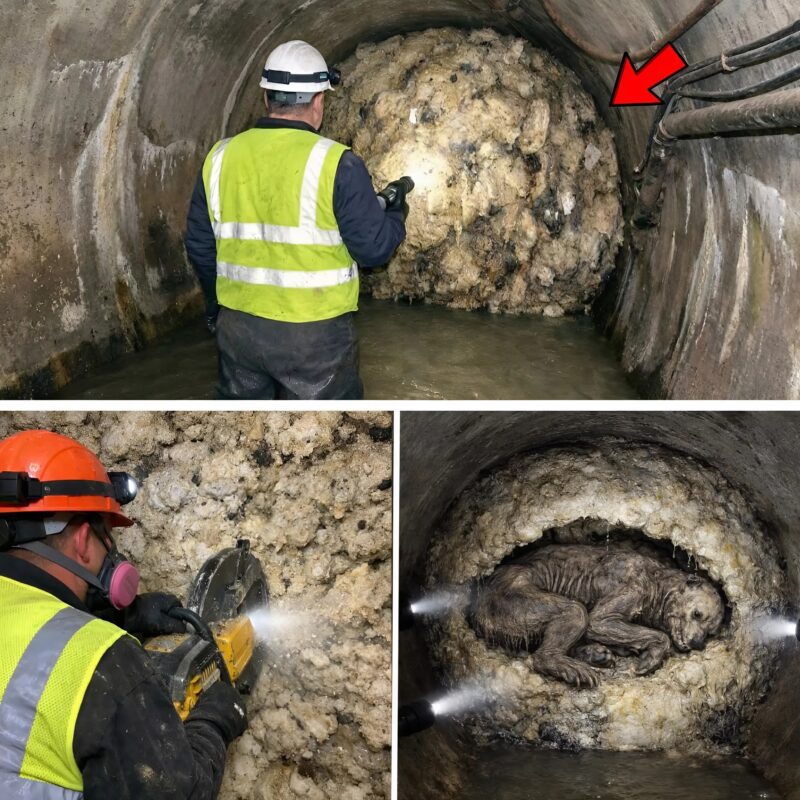
I was the first to see the outline of a huge head and short, powerful paws.
It turned out to be a bear — the very same giant that had once been the main star of the city zoo and had died during the historic flood decades earlier.
The cold, oxygen-poor moisture of the sewer had done something strange.
The animal’s fat had transformed into a dense substance — adipocere, the so-called “grave wax.”
It was as if it had sealed the bear inside the fatberg, turning the dark collector into a silent underground tomb where the tragically dead giant had lain almost untouched for decades.