When addiction tightens its grip around a family, it doesn’t just capture one person; it drags everyone into its storm. That was exactly the reality a father faced as he drove his son toward a rehab center, hands shaking on the steering wheel, heart heavy with dread and hope at the same time. He wasn’t forcing him out of cruelty. He was trying to save him. But to his terrified son, who didn’t believe he needed help and didn’t want to face the word “rehab,” it felt like betrayal. Fear can twist love into something threatening, and in that uneasy space, panic took over.
Halfway through the drive, desperation exploded into action. The son lunged forward, grabbed his father’s phone, and dialed 911. His voice trembled as he declared, “I’m being kidnapped.” It wasn’t logical. It wasn’t truthful. It was fear speaking louder than reason, the kind of fear fueled by denial, uncertainty, and the terrifying thought of confronting withdrawal, responsibility, and change.
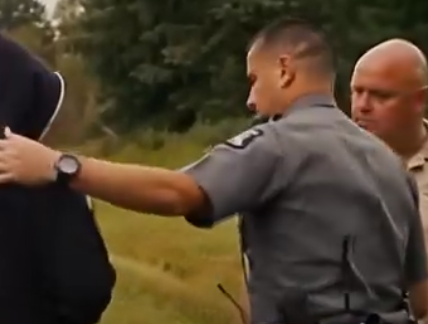
Officer Mike Carpinelli was the one who responded. Many officers might have arrived ready to escalate. Many could have seen it purely as a legal issue, an interruption, a problem to be quickly shut down. But when he stepped out of his patrol car and looked at the tense faces before him—a terrified young man and a father already exhausted from years of worry—he didn’t reach for authority. He reached for humanity.
He could have shouted. He could have scolded. Instead, he listened. He listened to the son’s anger, fear, defensiveness, excuses, and confusion. He listened to the father’s quiet heartbreak, his exhaustion, his plea that his child was slipping away. And rather than labeling the son as difficult, rebellious, or criminal, Officer Carpinelli recognized what many still fail to understand: addiction is not a moral flaw. It is not just “bad behavior.” It is an illness. A complicated one. A human one.
So he didn’t try to control the moment through force. He guided it through patience. What followed wasn’t a quick lecture or a threatening warning, but over an hour of conversation. He spoke gently, calmly, like someone lighting small candles in a dark room. He shared experiences. He answered questions honestly. He treated the young man not as a problem to fix, but as a person in pain. Slowly, silently, something shifted. Defensiveness softened. Panic loosened. The wall of resistance cracked just enough for hope to slip through.
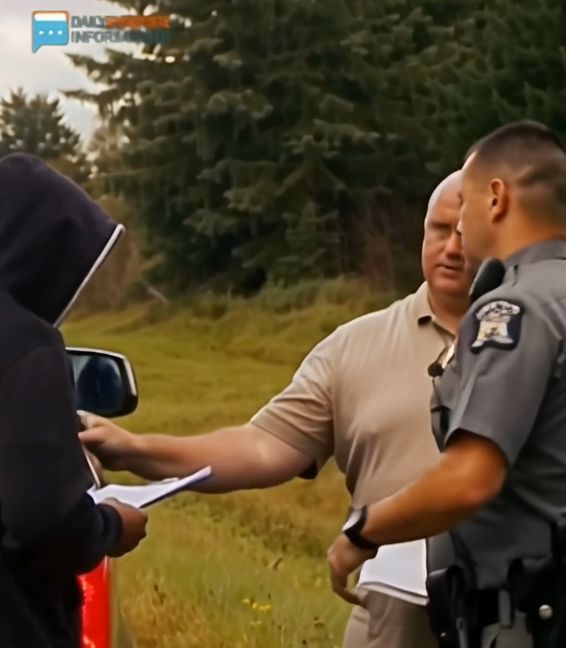
Finally, the son agreed to go to rehab. But he added one condition that revealed just how deeply the officer’s kindness had reached: he would only go if Officer Carpinelli took him himself. And the officer agreed. Not with flashing sirens or blazing authority, but with quiet dignity. They drove together, not as enemies, not even strictly as officer and suspect, but as one human helping another face something terrifying.
When they arrived, he didn’t simply drop him at the entrance and leave. He walked him inside. He crossed that symbolic threshold with him, staying a little longer than duty required, simply so the young man wouldn’t feel abandoned at the edge of a difficult beginning.
Addiction rarely tells a quick story. It’s a slow, painful unraveling that affects parents, children, siblings, and friends. It wounds trust. It replaces laughter with silence. It turns houses into battlefields of fear and exhaustion. Yet, this moment—this fragile, powerful moment—showed something else: the difference compassion can make. Sometimes, healing doesn’t begin with punishment, arguments, or ultimatums. Sometimes, it begins with a voice that refuses to give up on you, even when you’ve nearly given up on yourself.
We don’t know what happened after that day. We don’t know if rehab stuck, if recovery took root, if life slowly rebuilt itself. Addiction stories rarely come with neatly wrapped endings. But what we do know is that for one crucial hour, someone chose patience over pressure, empathy over ego, and care over convenience. That choice didn’t fix everything. But it gave the young man a fighting chance. And sometimes, a chance is the beginning of everything.
If you or someone you love is struggling with addiction, know this: you are not alone. There is help. There is hope. And even when the journey feels terrifying, there are still people in this world willing to stand beside you long enough to help you take the first step.