I will never forget that day — the day my Bruno almost died.
I live in a small Italian suburb near Ravenna, where the air always smells of flowers and fresh grass after the rain. Our street is peaceful, lined with green gardens and colorful fences. Bruno, my brown mixed-breed dog, is more than a pet to me — he’s my closest friend, my loyal shadow. He never hurt anyone; he just barked a lot, especially at night. Sometimes for no clear reason. But I always knew — he was only doing his job, protecting his little world.
Then came Marta, our new neighbor. A silent, pale woman, always dressed in black, with eyes that seemed to carry storms. At first, she greeted me politely. But soon, her greetings stopped. One afternoon, she appeared near the fence and said in a cold, sharp voice:
— Your dog kept me awake all night. If he doesn’t stop barking, I’ll call the authorities.

I tried to explain, softly, that he barked only at noises, that he meant no harm. She turned away without a word. From that moment, the air between our houses grew heavy.
A week later, I saw Marta again. She was standing in her yard, holding a small white plastic bag. Her stare was so strange — emotionless, but piercing. Something inside me trembled. I tried to smile, but she didn’t respond. That look stayed with me all day.
That evening, Bruno went out to the yard like always. He sniffed around, tail wagging, free and happy. Hours later, I noticed he was unusually quiet. I called his name — no answer. When I found him, he was lying on the ground, trembling, saliva dripping from his mouth, eyes half-open. My heart froze.
I picked him up and ran to the car. The veterinary clinic of Dr. Luca was only five minutes away, but every second felt endless. When we arrived, Luca checked him quickly, then looked up at me with concern.
— Elena, this is poisoning. He’s eaten something toxic.

— Poisoning? But how? I watch everything he eats!
Luca didn’t answer. He took samples, started an IV, and connected Bruno to oxygen. His little chest rose and fell rapidly, his body shivering with pain. I sat beside him, holding his paw, whispering that everything would be all right.
Two long hours later, Luca returned.
— We found traces of arsenic-like substances in his stomach. It must have been mixed with food. We’re doing everything we can, but the next twenty-four hours will decide.
My tears came without sound. Inside, rage burned — mixed with disbelief. Who could be capable of something so cruel?
The next morning, when I came home, I noticed something near the gate — a small white bag, just like the one I had seen in Marta’s hand. I put on gloves and opened it. Inside was a piece of meat — raw, with a strange chemical smell. My heart sank. I didn’t need more proof.
I called the police immediately. They took the bag as evidence and promised to investigate. I barely slept that night. Every sound outside made me tremble.

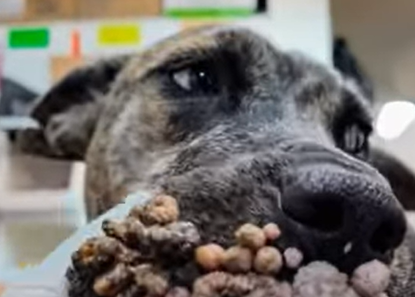
When I returned to the clinic, Bruno was still alive — weak, but fighting. His muzzle was swollen, and small sores had appeared on his skin. Luca explained that the poison had triggered an infection. “He’s strong,” he said. “He wants to live.” Those words became my hope.
For days, I stayed by his side. Bruno looked into my eyes — tired, yet trusting. One afternoon, he wagged his tail, barely moving it, but it was enough to make me cry. That single gesture meant he was still there.
Weeks passed. Bruno began walking again, slowly but proudly. Yet the damage on his mouth required surgery. Luca and his team operated carefully, removing infected tissue and healing the wounds.
The day he barked again — weak but determined — I laughed through tears. That sound, once considered noise, became music to my ears.
Marta disappeared from sight. No one saw her in the yard again. Three months later, the police called. The toxic meat had been traced to her purchase. She confessed — saying she only wanted to “quiet the dog” but “didn’t mean to hurt him.” The court sentenced her to pay all medical costs and attend therapy.

But I didn’t feel triumph — only sadness. That hatred could grow so quietly in someone’s heart, enough to harm an innocent soul. And yet, amid all that darkness, Bruno had survived.
Today, he is strong again. There are still small scars on his snout — tiny reminders of what we endured together. Sometimes he stands in the same spot where I found him, staring toward the fence, before turning his head to me. I smile and whisper:
— It’s over now, my friend. We’re safe.
Now, when we walk down our street, I always carry a bottle of water and some medicine in my bag — just in case. Life has changed, but our bond hasn’t.

People often ask why I still love dogs after all this. My answer never changes:
— Because their loyalty is stronger than human cruelty.
Bruno runs freely again, chasing butterflies, playing with children, barking at every noise. Some neighbors still complain. But I simply smile. That bark — that sound of life — is my favorite melody in the world.
And at night, when he lies on the cool grass, I watch him breathe peacefully. I think about how a little hatred could have destroyed so much love, yet a spark of faith brought it back. Every time Bruno barks into the darkness, I don’t hear noise anymore — I hear life, strength, and the heartbeat of love itself.