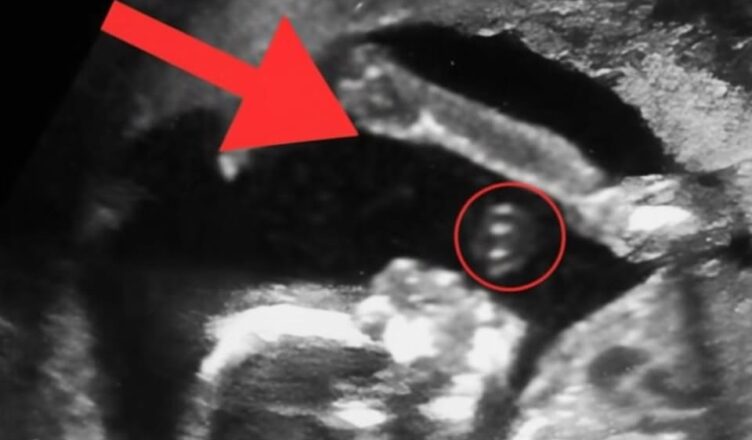
The ultrasound room smelled faintly of disinfectant and something metallic, a scent that always made my stomach tighten before I even knew why.
The doctor adjusted the machine, his movements practiced and calm, the kind that usually brought reassurance. I lay still, hands folded over my chest, watching the gray shapes flicker on the screen. This was supposed to be ordinary. Another check. Another quiet confirmation that life was moving forward as planned.
At first, nothing seemed wrong. The doctor hummed softly, nodding to himself, until he suddenly stopped. The hum of the machine continued, but his hand froze in midair.
The temperature in the room felt like it dropped several degrees, and I pulled my shoulders in, as if that might protect me from whatever had caught his attention. My heart began to beat louder, each thump echoing in my ears, drowning out every rational thought.

I waited for him to say something casual, something harmless. Instead, he leaned closer to the screen, his brows knitting together. My sister, seated beside me, noticed the shift immediately. She reached for my hand and squeezed, a silent question passing between us. We had joked earlier about stopping for coffee afterward, about how we would laugh at our nerves once it was over. The memory felt distant now, like it belonged to someone else entirely.
“Is everything all right?” I asked, forcing the words out evenly, even though my throat felt tight.
The doctor didn’t answer at first. He adjusted the screen, tilted it, then adjusted it again. Seconds stretched until they felt unbearable. Finally, he exhaled and turned toward us, his voice measured. “This isn’t what we usually see,” he said. Not alarming, not reassuring—just factual.
As he explained, my thoughts drifted between fear and an odd sense of clarity. The images showed something rare, something that didn’t fit neatly into expectation or textbook certainty. It wasn’t an immediate danger, he said, but it wasn’t something they could ignore either. More tests would be needed. More waiting. More unknowns. A fog seemed to roll through my mind, blurring the future I thought I understood.

When the appointment ended, we walked out in silence. The parking lot was bright with afternoon sun, but I barely noticed. I sat in the car long after my sister started the engine, staring at my reflection in the window. I looked the same, yet different, as if the person I had been that morning no longer existed.
That night, sleep refused to come. I lay awake listening to the soft whir of the ceiling fan, replaying the doctor’s words again and again. My phone buzzed with messages from family, all asking how it went. I typed responses, deleted them, then turned the screen face down. The dark felt heavy, but also strangely honest.
Over the next few days, fear shifted into something steadier. I read everything I could find, learned unfamiliar terms, asked questions I never imagined asking. Each appointment brought fragments of information, pieces of a puzzle that didn’t quite fit together. The doctor remained cautious but attentive, and my sister never missed a visit, her presence a quiet anchor.
Weeks later, another ultrasound was scheduled. This time, I walked into the room with a different posture, my fear tempered by determination. The doctor studied the screen again, longer than before. My sister’s grip tightened, and I focused on my breathing, slow and deliberate.
Then something unexpected happened.

The doctor smiled.
“It’s clearer now,” he said. “What we saw before wasn’t a problem developing—it was a solution forming.”
He explained that the anomaly wasn’t a sign of something going wrong, but of the body adapting in an unusual way. Rare, yes. Unpredictable, perhaps. But not a threat. In fact, it suggested a resilience he didn’t often witness.
I felt laughter bubble up before tears did, a release I hadn’t known I was holding back. My sister laughed too, the sound shaky but real. The future didn’t snap back into its old shape—but it opened into something wider, richer, and more honest.

Months later, as life slowly settled into a new rhythm, I realized the real change hadn’t been in the ultrasound room at all. It had happened afterward, in the waiting, the uncertainty, the choice to keep moving forward without guarantees.
That pause—the silence that once terrified me—had taught me something I never expected: that not knowing doesn’t mean not living. It means paying attention.
And when I finally held proof of that resilience in my hands, warm and breathing and undeniably real, I understood the truth of it completely. The story hadn’t ended in that room. It had begun there, unfolding into something brighter than I could have planned.