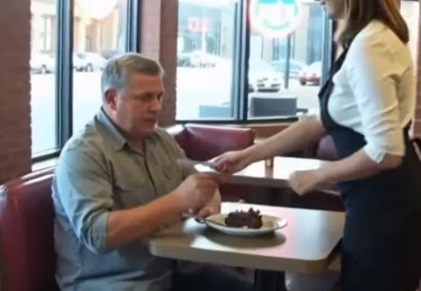
Inside the dimly lit steakhouse, the air feels heavier than it should, as if the walls themselves are holding their breath. The low murmur of conversation, the clink of cutlery against porcelain plates, the faint sizzle drifting from the kitchen—all of it blends into a carefully rehearsed illusion of normalcy.
But Daniel Whitmore knows better. Places like this always tell two stories: the one customers see, and the one hidden behind swinging doors and forced smiles.
Each step he takes toward the “EMPLOYEES ONLY” sign feels deliberate, measured. His polished shoes barely make a sound against the dark wood floor, yet inside his chest, his heart beats with a steady insistence. He hasn’t walked into one of his restaurants unannounced in years—not since the early days, when every location felt like a gamble and every payroll cycle kept him awake at night. Tonight, he’s not here as a figurehead. He’s here as a man who senses rot beneath a polished surface.

In his jacket pocket, a folded note presses against his ribs. Six words, scribbled hastily in black ink:
You need to see this. Please.
Jenna’s handwriting. Small, careful, but trembling at the edges.
Daniel slows near the edge of the dining room and allows himself a final glance back. The guests look content—laughing couples, a family celebrating a birthday, a pair of older men splitting a bottle of red wine like they’ve done a hundred times before. A server moves between tables with practiced ease, her smile fixed just a fraction too tightly.
Near the bar stands Bryce.
Tall. Confident. Immaculate suit jacket despite the heat of the kitchen nearby. Bryce’s laugh carries easily, the kind that makes people believe he’s charming rather than calculating. Corporate loves him. Numbers always look good under his management. Labor costs trimmed. Waste minimized. Profits steady.
But Daniel has learned something over the decades: when numbers look too perfect, someone is usually paying the price.
Bryce’s back is turned, deep in conversation with a couple of regulars. Still, Daniel feels the man’s presence like pressure behind the eyes—a storm cloud waiting for the right moment to break.
Without another look, Daniel pushes through the door.
The hallway beyond is narrow and sterile, lined with stainless steel surfaces that reflect fluorescent light in sharp, unforgiving angles. The air hums with the constant vibration of industrial refrigerators. The comforting warmth of the dining room vanishes, replaced by a colder, more mechanical reality. This is where the restaurant breathes. This is where truth lives.
At the far end of the corridor, Jenna waits.
She stands half in shadow, half under the harsh white glow of a ceiling light that flickers intermittently. Her uniform is spotless, but her posture betrays exhaustion—shoulders slightly hunched, hands clasped together as if bracing for impact. When she looks up and sees him, something shifts in her expression: relief, yes, but also resolve.
“Mr. Whitmore,” she says quietly, her voice steady despite the tension vibrating beneath it. “I wasn’t sure you’d come.”
Daniel offers a small, reassuring smile. “It’s Daniel. And I’m glad you reached out.”
She swallows, glancing instinctively toward the kitchen door, as if expecting it to swing open at any second. “I didn’t want to cause trouble. But I couldn’t keep pretending everything’s fine.”
“That’s usually how trouble starts,” Daniel replies gently. “Tell me.”
Jenna exhales slowly, as though releasing months of pent-up fear. “It’s Bryce. He looks perfect on paper, but behind the scenes… he humiliates people. Cuts shifts without warning. Forces servers to work sick. He rewrites schedules overnight and then punishes anyone who can’t magically adjust their lives.”
Daniel’s jaw tightens, though his face remains calm.
“He pushes us to cut corners,” she continues. “Smaller portions. Cheaper ingredients swapped in when no one’s watching. And if someone questions it—if they care too much—he reminds them how easy they are to replace.”
Her fingers tremble now, despite her efforts to stay composed. “People cry in the walk-in freezer because it’s the only place cameras can’t see.”
The words land heavily.
Daniel closes his eyes briefly, memories flashing uninvited—long nights on the grill, scraping by, promising himself that if he ever succeeded, his restaurants would never be places of fear.
“What about HR?” he asks quietly.
Jenna lets out a humorless laugh. “Bryce writes the reports before anyone else can. By the time complaints reach corporate, they’re framed as performance issues. High turnover? ‘Young workers lacking discipline.’ Burnout? ‘Staff unwilling to meet standards.’”
She hesitates, then adds softly, “Some of us need these jobs too much to risk being labeled ‘difficult.’”
Daniel nods slowly. He understands. Survival has a way of silencing even the strongest voices.
“You did the right thing,” he says firmly. “And you won’t stand alone.”
Her eyes glisten, though she quickly blinks the tears away. “I hoped you’d say that.”
As Daniel steps back into the dining room moments later, everything looks the same—but he sees it differently now. The smiles. The laughter. The illusion. Behind it all, a system quietly failing the people who keep it alive.
Bryce catches his eye for just a second.
Daniel holds the gaze. Calm. Unblinking.
That’s when Bryce’s smile falters—just slightly.
Outside, the night air carries the mixed scent of asphalt, grilled meat, and cooling fryer oil. Daniel inhales deeply. This place doesn’t need another glossy report or empty motivational speech. It needs accountability. It needs humanity restored.
He unlocks his truck, already drafting a list in his mind: surprise audits. Anonymous interviews. Security footage reviewed by people Bryce doesn’t know. And when the truth surfaces—as it always does—there will be no grand confrontation. Just consequences.
As the engine turns over, Daniel allows himself one final thought:
A restaurant isn’t built on margins alone.
It’s built on people.
And in Fort Smith, the balance is about to be corrected—quietly, decisively, and for good.