
Central’s Chinachem Tower Declared Structurally Safe After Scaffolding Fire Injures Four
A major fire erupted at Chinachem Tower in Hong Kong’s Central district on Saturday, October 18, 2025, sending plumes of smoke through the busy business area and prompting a large-scale emergency response.
Despite the intensity of the blaze, which tore through the building’s exterior scaffolding, the Buildings Department has confirmed that the structure remains safe, with no major damage detected.

The Fire: Flames Engulf Scaffolding Along Connaught Road Central
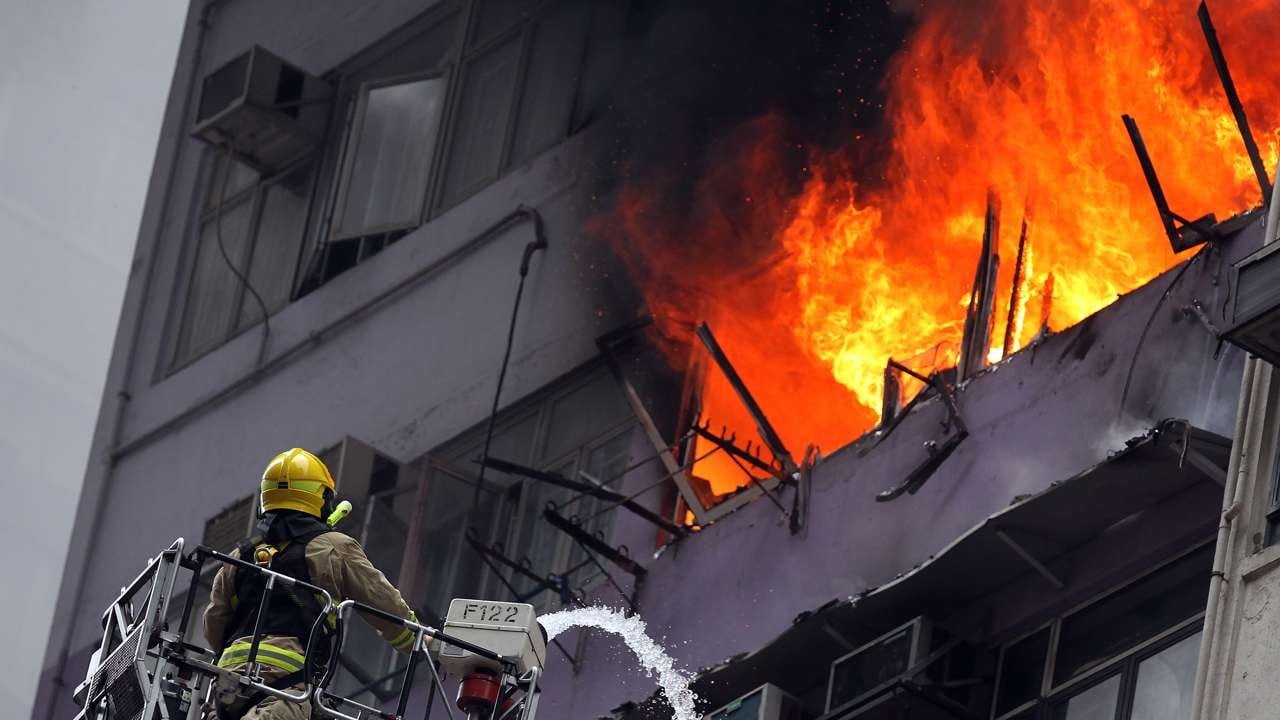
According to reports, the fire began around 4:24 p.m. at the Chinachem Tower on Connaught Road Central. Within minutes, flames spread rapidly across the bamboo scaffolding that covered the exterior of the skyscraper. Witnesses described seeing bright orange flames racing up the side of the building, while debris fell onto the street below.
Videos circulating online showed emergency crews rushing to the scene as dozens of occupants were evacuated from the offices and shops inside. Firefighters battled the blaze for nearly five hours before bringing it under control at approximately 9:13 p.m., according to Fire Services Department Deputy Divisional Commander Lo Shui-sang.
“The fire was mainly located on the façade of the building. The inside was not seriously affected,” Lo told reporters during a press briefing. He confirmed that a fire investigation team had been established to determine the exact cause of the incident and whether any foul play was involved.

Four People Hospitalized, Two in Serious Condition
Authorities confirmed that four individuals were hospitalized following the fire, with injuries ranging from burns to smoke inhalation and impact trauma.
Among them was a 23-year-old man who initially suffered critical head injuries but was later upgraded to a “serious” condition by Sunday evening. A 55-year-old man who had been listed as critical on Saturday was reported to be in a stable condition by midday Sunday.
Two other victims—a 35-year-old woman and a 65-year-old man—also remained in stable condition, according to updates released by local health officials.
The Hospital Authority stated that all four victims were receiving continuous monitoring and treatment at nearby hospitals, while additional medical staff were deployed to assist emergency operations during the incident.

Buildings Department: “No Structural Hazard Detected”
In a statement released Sunday, the Buildings Department said its inspection team had noted no structural hazards at Chinachem Tower after a thorough site assessment.
“While the fire caused external damage, our staff observed that the building remains structurally sound,” the department said. However, they noted that some loose materials on the outer façade needed immediate removal to prevent secondary accidents.
The department also confirmed that all protective nets, tarpaulins, and scaffolding coverings used during ongoing renovation work were up to official safety standards. Minor works on the exterior walls and air-conditioning brackets had previously been approved under Hong Kong’s building codes.
Nevertheless, officials said a follow-up investigation is underway to determine if any regulations were breached, particularly regarding fire safety compliance during construction or renovation activities.

Expert Opinion: Sparks, Cigarettes, or Construction Work?
Former Fire Services Department assistant divisional officer Leung Kam-tak, now working as a private fire consultant, shared insights with NowTV on Sunday.
“I assume the fire started from a low height,” Leung said, suggesting several possible causes. “We need to investigate whether welding was taking place during the renovation work, as sparks could easily ignite nearby materials.”
He added that an alternative cause could have been a discarded cigarette butt thrown into a roadside skip or waste container near the scaffolding. “If the canvas material used on the scaffolding contained plastic, it would ignite quickly and spread upward at an alarming rate,” he explained.
Fire safety experts have long warned that plastic-based tarpaulin—though cost-effective—poses a significant fire risk in Hong Kong’s humid and densely built urban environment.
Scaffolding Safety Under Scrutiny
This incident has reignited public discussion about the safety of scaffolding practices in Hong Kong, particularly in high-density commercial districts. Bamboo scaffolding, though a long-standing tradition in the city’s construction culture, has increasingly come under review due to its flammability and susceptibility to rapid fire spread.
In recent years, Hong Kong authorities have urged contractors to adopt flame-retardant materials and strengthen site supervision during construction work. Yet, with the city’s skyline constantly evolving, ensuring compliance across hundreds of active renovation projects remains a challenge.
Urban safety advocates are now calling for a comprehensive safety review of building renovation standards, arguing that stricter penalties should apply when negligence leads to life-threatening incidents.
Community Reaction and Emergency Response
Eyewitnesses praised the swift response from Hong Kong’s Fire Services Department, which deployed multiple fire engines, ladder trucks, and ambulance units within minutes of the first emergency call.
One nearby office worker told local media: “The smoke was so thick that we could barely see across the street. Firefighters worked nonstop. It was terrifying, but they handled it professionally.”
Social media users also shared clips of the rescue operations, with many commenting on the resilience of Hong Kong’s emergency services amid growing urban fire risks.
Local businesses around the Connaught Road area experienced temporary disruptions due to blocked roads and safety cordons, but authorities confirmed that normal operations resumed by Sunday afternoon.
The Chinachem Tower: A Landmark in Central
Chinachem Tower, located in the heart of Hong Kong’s financial district, is a well-known commercial skyscraper home to offices, shops, and financial institutions. The building, part of the Chinachem Group portfolio, has been a recognizable landmark for decades, representing the blend of heritage and modernization that defines Central’s skyline.
The Chinachem Group has not yet issued a formal statement but is reportedly cooperating fully with government inspectors and fire investigators.
Looking Ahead: Safety and Prevention
As the investigation continues, Hong Kong authorities emphasize the need for greater awareness of fire safety, especially during renovation projects involving scaffolding. Contractors are reminded to conduct risk assessments, use certified fire-retardant materials, and ensure no open flames or welding sparks occur near flammable surfaces.
Meanwhile, the Fire Services Department reaffirmed its commitment to transparency in the investigation and promised to release a detailed report once the cause of the blaze is confirmed.
For residents and businesses in the Central district, the incident serves as a stark reminder of how quickly fire can spread—even in modern, regulated structures.
This is what happens to your body when you stop having intimate relationships
This is what happens to your body when you stop having intimate relationships

Human bodies respond to habits, routines, and emotional patterns. Intimate relationships, whether emotional or physical, are part of many people’s lives and influence overall well-being in more ways than most realize.
When someone stops having intimate relationships, the body and mind may experience a variety of changes. These changes are not necessarily harmful or permanent, but they highlight how deeply human connection and physical closeness can affect health.
Understanding Sex: A Beginner’s Guide
One of the first changes people may notice is related to stress levels. Intimate interaction often triggers the release of hormones such as oxytocin and endorphins—chemicals that help reduce stress and promote feelings of calmness and security.
Without these natural mood-boosting hormones, some individuals may feel slightly more anxious or tense.
This does not mean that everyone becomes stressed without intimacy, but the absence of these calming hormones can make daily pressures feel heavier for some people.
Another common change relates to sleep quality. The relaxation and emotional comfort associated with close relationships can help regulate sleep patterns. Oxytocin, which increases during moments of connection, also supports deeper and more restful sleep.
When intimacy decreases, some individuals may find themselves experiencing lighter sleep, waking up more often, or having more difficulty falling asleep. These effects vary widely from person to person, but they reflect how the body responds to shifts in emotional bonding.
A third area affected is mood and emotional balance. Physical closeness stimulates dopamine, a neurotransmitter tied to joy, motivation, and emotional satisfaction. Without regular emotional or physical intimacy, dopamine fluctuations may lead to periods of irritability or lower motivation.
This does not mean that a person becomes unhappy, but rather that the brain may need to adjust to new ways of generating emotional stability.
The body may also experience changes in the immune system. Some studies suggest that regular close physical connection can slightly strengthen immunity by reducing stress-related inflammation.
When stress rises or healthy emotional outlets decrease, the immune system can become more sensitive. While stopping intimate relationships does not weaken immunity in a dramatic way, the body may respond differently to fatigue and stress.
Another notable shift may occur in self-esteem and body awareness. Feeling desired or emotionally connected often reinforces self-confidence. Without this form of affirmation, some people may become more self-critical or more aware of their insecurities.
Others, however, experience the opposite: stepping away from intimacy gives them a chance to rediscover independence, build confidence from personal achievements, and focus on self-growth. The experience varies widely depending on personality and emotional circumstances.
In addition, stopping intimate relationships can influence hormonal balance. Physical closeness can subtly regulate hormones related to mood, energy, and stress. When this routine stops, hormones such as cortisol may rise temporarily, leading to mild fatigue or emotional fluctuations. These hormonal shifts are usually temporary and stabilize as the body adapts.
Social and emotional connection also play an important role. Humans naturally seek bonding, whether through friendship, family, or partnerships. When intimate relationships decrease, the need for connection often shifts to other forms. Many people compensate by strengthening friendships, pursuing hobbies, or focusing on self-care. This can be deeply beneficial and even help people understand themselves better.
Ultimately, stopping intimate relationships does not harm the body in a permanent or dramatic way.
The changes that occur are mainly related to hormones, mood, sleep, and stress regulation. What matters most is how individuals replace emotional and physical connection with healthy habits, meaningful relationships, and self-care.
Intimacy is one form of human connection, but it is not the only one. When people nurture emotional well-being in other ways, they can remain just as healthy, fulfilled, and balanced at any stage of life.
These are the signs that it is cre…See more
These are the signs that it is cre…See more