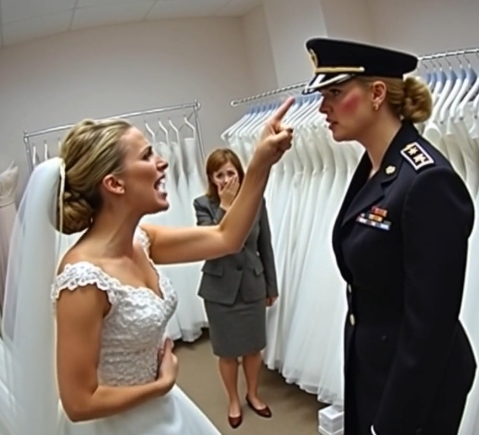
Vanessa’s eyes widened in disbelief as the clerk handed back the card, shaking her head. My sister’s voice, usually so composed and poised, was now a frantic staccato. Her perfect world was crumbling, and with it, the illusion of a flawless day orchestrated with someone else’s resources.
I watched from the sidewalk, invisible, as the boutique’s atmosphere shifted from indulgent anticipation to palpable tension. The other brides and their entourages offered uncomfortable glances, whispering behind manicured hands. The dreamscape fantasy of white lace and promises was becoming a spectacle no one could look away from.
Inside, my mother finally intervened, her voice low but firm, trying to salvage the situation with the manager. She didn’t look out the window—didn’t search for me. How convenient it was to turn a blind eye to the one who had been holding everything together while they basked in the spotlight.
For years, I’d played the role of the supportive sister. The one who sent postcards and care packages from whichever base I was stationed at. The one who did her best to bridge the gap between Vanessa and reality. But standing on that sidewalk, I realized the price of keeping up the facade had become too high.
As I turned to leave, a part of me hoped that this collapse would be a wake-up call for my sister. Perhaps she’d learn that relationships are not transactions, that money doesn’t equate to love or respect. But I knew better than to hold my breath.
Walking away, I felt the weight of the world lift slightly off my shoulders, the burden of an unfair expectation finally breaking. With each step, I felt more grounded, reclaiming the parts of myself I had sacrificed at the altar of family loyalty.
Vanessa would eventually figure out a solution—she always did. Whether through our parents stepping in or her fiancé coming to the rescue, the wedding would happen. But it would no longer be my problem.
I passed by the historic Charleston storefronts, the sun glinting off the ocean far down the street, and pulled my phone out again. Scrolling through my contacts, I found my commanding officer’s number. I needed to return to the people who valued me not for the money I could provide, but for the strength and dedication I brought to my work.
With a deep breath, I dialed the number, the phone ringing as I continued down the street. The call connected, and I heard the familiar voice on the other end.
“Hey, it’s me,” I said, my voice steady. “I’m ready to come back early if there’s an opening.”
As we discussed logistics, I felt a sense of calm wash over me. The future was uncertain, but for the first time in a long time, it was mine. I hung up and took one last look at Everly & Co., the scene inside still unfolding. Then I turned and walked toward a future that was finally mine to shape—no longer shadowed by someone else’s dreams.