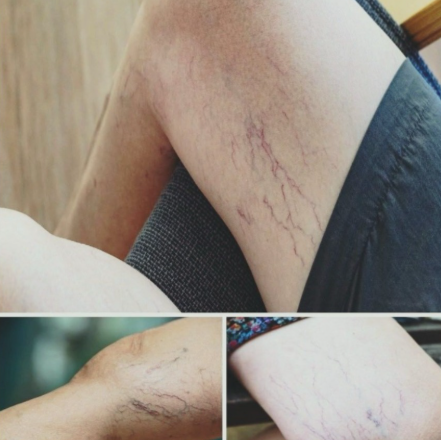
Visible purple veins on your legs may be a cause for concern.
Although it is common, it is important to understand this phenomenon to determine if it requires treatment.
These veins can have several causes, ranging from simple hormonal changes to more serious circulatory problems. Here’s a detailed discussion of this topic.
Possible causes of purple veins
Purple or blue veins in the legs are often the result of circulation problems. The veins in the legs perform a crucial function: transporting blood back to the heart. When veins become visible or change color, it indicates that the blood is having trouble circulating properly. This poor circulation leads to blood pooling in some veins, causing them to swell.
One of the main causes of varicose veins is venous insufficiency. This occurs when vein valves don’t function properly. Typically, these valves prevent blood from flowing backward. However, if the valves aren’t working properly, blood can pool and cause varicose veins, which are dilated and visible. In this case, the veins may appear purple or blue, depending on their proximity to the skin’s surface.
Women are particularly susceptible to this phenomenon. Hormonal changes associated with pregnancy, menopause, or contraception can increase the risk of varicose veins. Furthermore, women with a genetic predisposition to this type of venous problem may develop varicose veins more quickly.
Another common cause is prolonged standing. People who spend a lot of time standing or constantly put weight on their legs may notice more visible veins. Gravity puts pressure on the veins, and when blood has difficulty returning to the heart, it pools in the legs.
When should you see a doctor?
While purple veins aren’t always dangerous, there are certain symptoms to watch out for. If varicose veins are accompanied by pain, swelling, or changes in skin color, it’s recommended to consult a specialist. Sometimes, these symptoms can indicate deep vein thrombosis, a more serious condition in which a blood clot forms in a vein. In this case, quick action is crucial to avoid complications.
It’s also recommended to consult a doctor if varicose veins cause aesthetic or emotional discomfort. Although it’s not a medical emergency, there are many treatment options, from non-invasive procedures to surgical interventions, depending on the severity of the varicose veins.
If you notice an increase in the number of visible veins or a change in their color, your doctor will help you understand the cause of the problem and suggest appropriate solutions. In either case, it’s best to act early to prevent future complications.
How to prevent purple veins?
There are several steps you can take to reduce the risk of visible veins. One of the simplest solutions is regular physical activity. Activities like walking, swimming, or cycling improve blood circulation and strengthen leg muscles. Movement facilitates blood flow through the veins.
Diet also plays an important role . A diet high in fiber and low in salt helps prevent water retention and maintain healthy blood circulation. It’s also recommended to maintain a healthy body weight to avoid excessive strain on the legs.
Finally, maintaining good posture is helpful. When standing for long periods, it’s recommended to take regular breaks and elevate your legs to improve circulation. Avoid crossing your legs too often, as this can restrict blood flow.
Purple veins on the legs often result from poor circulation, often linked to hormonal factors, genetics, or lifestyle. While it’s not always a serious condition, it’s crucial to monitor its progression. If you experience any concerning symptoms, consult a doctor. Treatment options are available, and the sooner you take action, the better you’ll take care of your veins and leg health.