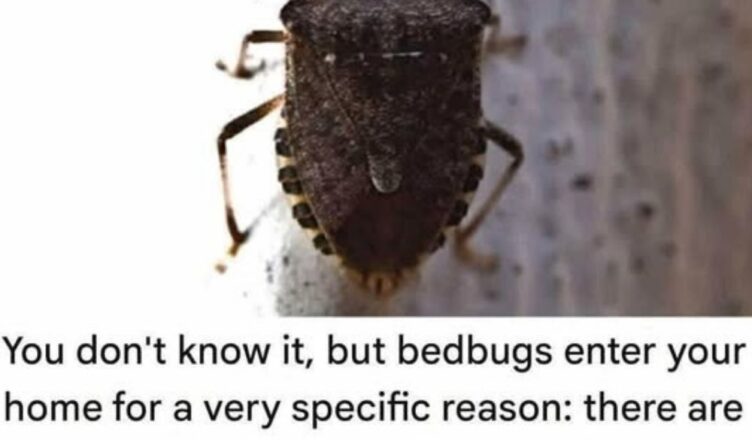
There’s a common misunderstanding spreading online that needs a clear correction. An insect recently described as a “bedbug” doesn’t actually match what bedbugs look like or how they behave. This confusion matters, because misidentifying insects can lead to unnecessary fear, expensive treatments, and ineffective solutions.
Let’s clarify the facts.
True bedbugs are a specific parasitic insect. They are small, flat, reddish-brown, and feed exclusively on human blood. They live almost entirely indoors and hide in very particular places: mattresses, bed frames, headboards, furniture seams, baseboards, and small wall cracks. They are nocturnal and usually come out at night while people are sleeping.
Bedbugs are not green.
They do not live outdoors.
They are not commonly seen crawling on walls or near windows during the day.
If you’re seeing green insects around windows, walls, or near light sources—especially during seasonal changes—you are likely dealing with something completely different.
The insect often confused with bedbugs is a green stink bug. These insects live outdoors and feed on plants. They are commonly found in gardens, wooded areas, and agricultural spaces. During cooler months, they sometimes enter homes in search of warmth and shelter.
Unlike bedbugs, stink bugs:
• Do not feed on blood
• Do not infest beds or furniture
• Do not reproduce indoors in large hidden colonies
• Are usually attracted to light and warmth
You’ll typically find them near windows, doors, ceilings, radiators, or light fixtures—not inside mattresses.
Their presence is usually temporary and seasonal. While they can be annoying (especially if disturbed), they are not parasitic and do not pose the same health concerns associated with bedbug infestations.
The key takeaway is simple: correct identification matters.
Bedbugs require professional pest control intervention and targeted treatment. Stink bugs usually require simple sealing of entry points and seasonal prevention measures.
When we confuse the two, panic spreads unnecessarily. Accurate information allows people to respond calmly, take the right steps, and avoid costly mistakes.
Understanding what you’re actually seeing in your home is the first step toward solving the problem properly.