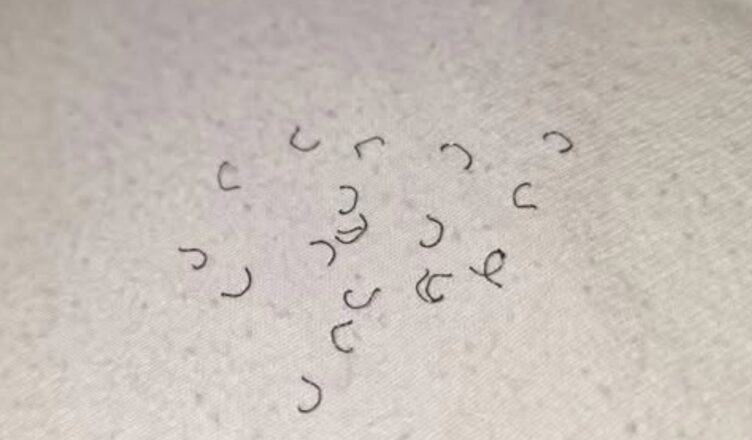
Have you ever woken up to find tiny, curved shavings on your bed, desk, or even clinging to your wrist after removing your smartwatch? At first glance, they look eerily similar to miniature Velcro hooks. If there’s no Velcro anywhere nearby, the discovery can be confusing—and a little unsettling. Where did they come from?
This strange sight has sparked countless questions online, turning what seems like a small mystery into a surprisingly common experience.
The Velcro-Like Shavings Mystery
Those tiny curls often resemble plastic hooks or fibers, leading many people to assume something is breaking down in their surroundings. Some worry it could be insects, bedding damage, or even something more serious. But in most cases, the explanation is far more ordinary than it first appears.
What’s Really Causing Them?
One of the most common sources is something many people wear every single day: a smartwatch or fitness tracker band. Silicone and rubber straps are designed to be flexible and comfortable, but daily use takes its toll. Over time, friction, sweat, and constant movement gradually wear down the material, causing it to shed tiny pieces that curl as they break away—creating those Velcro-like shavings.
Several factors can speed up this process:
- Daily wear and tear – Constant movement, adjustments, and repeated removal weaken the strap material over time.
- Sweat and skin oils – Natural oils and moisture build up under the band, slowly degrading the surface.
- Friction from desks and clothing – Resting your wrist on a desk or having sleeves rub against the band accelerates breakdown.
- Lower-quality or aging bands – Cheaper silicone or older straps tend to degrade faster than higher-quality materials.
Should You Be Concerned?
In most cases, these shavings are harmless. They don’t damage your smartwatch and aren’t dangerous. They’re simply a sign that the band is aging. However, if you notice excessive shedding, visible cracks, or skin irritation, it’s a good idea to replace the strap.
How to Keep It from Happening Again
If you want to reduce shedding and extend the life of your watch band:
- Clean it regularly with mild soap and water
- Rotate between different bands instead of wearing the same one every day
- Reduce friction by adjusting how your wrist rests on surfaces
- Invest in a higher-quality replacement strap designed for durability
The Bottom Line
Those strange, Velcro-like shavings may look alarming when you first spot them on your bed or skin—but the truth is far less shocking than it seems. They’re simply the natural result of everyday wear on a smartwatch or fitness tracker band. If you’re seeing them more often, it’s probably just your band telling you it’s time for a replacement.