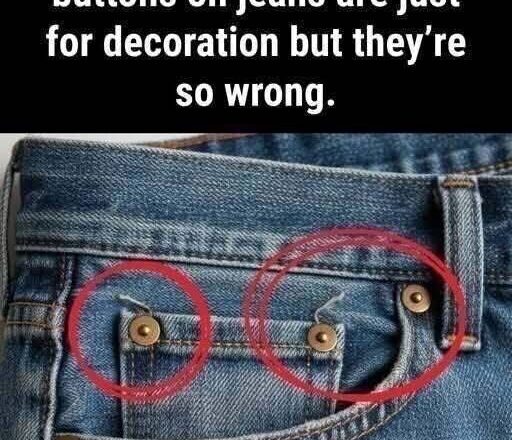
Most people rarely pay attention to the tiny metal studs placed on the corners of their jeans pockets. At a glance, they look like simple design details added for appearance alone. In fact, these small metal pieces, known as rivets, serve an important purpose and are one of the reasons denim became famous for its durability.
Their story goes back to the late nineteenth century, when jeans were not seen as everyday fashion, but as practical workwear made for tough conditions. Men working in physically demanding jobs, including miners, railroad workers, and laborers, needed clothing strong enough to handle constant strain, heavy use, and long days on the job. The problem was that early denim pants often wore out quickly in the same places, especially near the pockets and seams, where the fabric was under the most pressure.
A tailor named Jacob Davis noticed this weakness again and again while repairing damaged work trousers. Instead of depending only on stitching, he came up with a smarter solution. He began reinforcing the most vulnerable areas of the pants with small metal fasteners, hoping to stop the fabric from tearing so easily. The idea proved highly effective, because the metal pieces helped strengthen the exact spots where the material suffered the most stress.
As the concept showed its value, Davis joined forces with Levi Strauss, and together they patented the design. That moment would help change the history of denim forever. Riveted jeans quickly earned a reputation for being far stronger and longer-lasting than ordinary work pants, which made them especially valuable to workers who needed clothing they could rely on every day.
The rivets worked by distributing tension more evenly across the fabric, reducing the chance that seams would split or pockets would rip away under pressure. Materials such as copper and brass became popular choices because they resisted rust and remained sturdy even after repeated wear and washing.
Even today, rivets continue to appear on jeans, despite countless changes in cuts, colors, and styles. Many people barely notice them, and some assume they are there only for decoration. Yet the most interesting detail is that these tiny pieces of metal were never originally about fashion at all. They were created as a practical invention to solve a real problem, and they still quietly protect the fabric today, proving that some of the smartest design features are also the easiest to overlook.