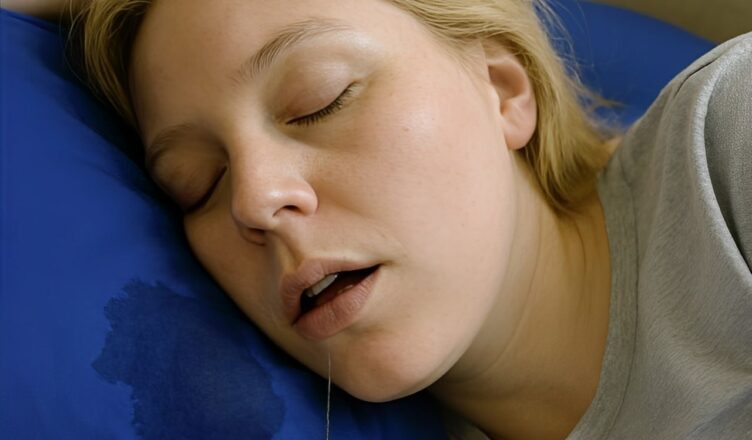
Do you feel a drop of saliva on your pillow when you wake up?
If this happens to you often, it may not be just an embarrassing habit.
It is common in children, but in adults it may be a symptom of an underlying disease.
Your body may be trying to warn you…
Here are the 6 main medical causes that may explain excessive salivation at night and, most importantly, how to deal with it naturally.
6 Possible Medical Causes of Excessive Drooling at Night
Oral problems: from gums to uneven teeth
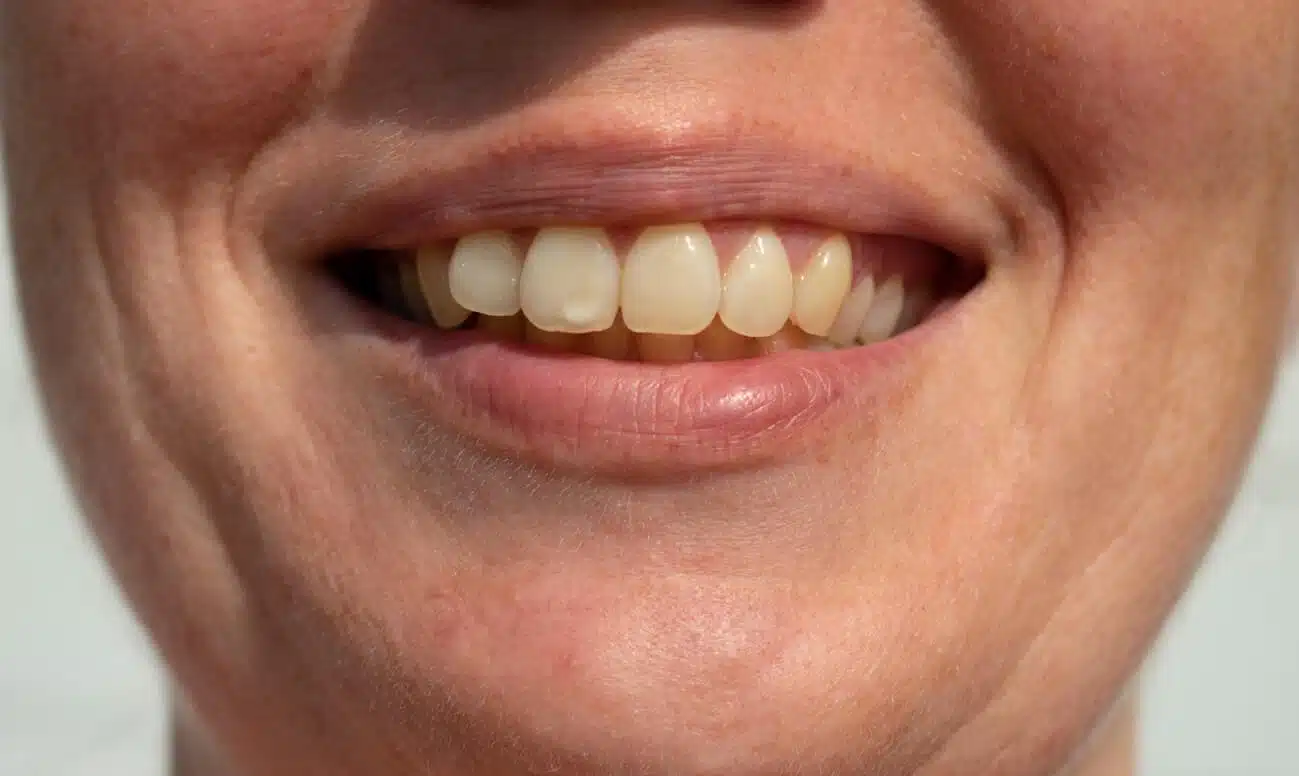
Inflammation, infections, tooth decay, and even poorly fitting dentures can overstimulate the salivary glands. Misaligned teeth or gingivitis can cause disruptions in salivary regulation during sleep.
Helpful tip: If you have any concerns, consult your dentist. To reduce this phenomenon, a healthy, properly positioned mouth is essential.
Facial paralysis: visible muscle weakness
If one side of the face appears less tense or even frozen, this may be a sign of facial paralysis. This imbalance prevents the retention of saliva, especially on the affected side.
What to look for: a drooping corner of the mouth, an open eye… In such a case, you should see a doctor as soon as possible.
Gastroesophageal reflux: when acidity increases
This digestive disorder causes excessive salivation. Why? The increased acidity in the esophagus triggers a protective reflex: salivation.
Accompanying symptoms: heartburn, chest pain, bitter taste in the mouth. Targeted treatment can really make a difference.
Parkinson’s disease: a little-known side effect
Patients often experience excessive salivation. Not only is excessive saliva produced, but difficulty swallowing it further exacerbates the problem.
This symptom is often accompanied by: tremors, muscle stiffness, and slowness of movement.
Brain thrombosis: watch out for warning signs
A clot in the brain can affect the muscles responsible for swallowing. This can cause saliva to accumulate during sleep, especially on one side.
A medical emergency occurs if you notice: persistent drooling on one side, facial asymmetry, speech or vision problems.
Arteriosclerosis: A Silent Threat to the Elderly
Atherosclerosis can limit the flow of oxygen to the brain. This deficiency weakens facial muscles and makes swallowing difficult.
Be cautious if you have: high blood pressure, diabetes, or high cholesterol. Good cardiovascular prevention is essential.
3 Simple Ways to Reduce Nighttime Drooling
Change your sleeping position

Sleeping on your back promotes better mouth closure. Avoid sleeping on your stomach or side, especially if your mouth opens easily during sleep. An ergonomic pillow can improve your posture.
Take care of your oral hygiene
It is important to brush thoroughly, floss, and use the right mouthwash. Poor hygiene or a mild infection can be enough to disrupt saliva production.
Check your treatment
Some medications can increase saliva production. If you suspect a side effect, contact your doctor. Never change your medication without consulting your doctor.
To sum up

Drooling during sleep isn’t always harmless. It can reveal oral, digestive, or neurological imbalances. The good news: in many cases, simple and natural activities can help you regain restful, dry sleep.
Listen to your body…even at night.