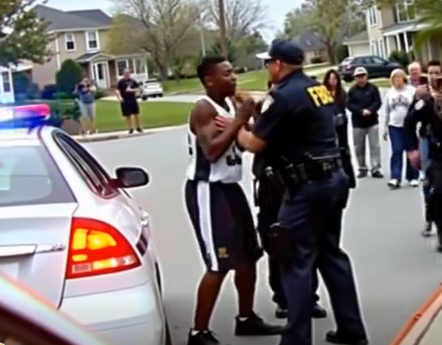
The atmosphere in the precinct shifted the moment Special Agent David Carter entered. His stature was imposing, but it was the authority in his voice that commanded attention.
Officers exchanged nervous glances, unsure how to respond. Reed’s arrogance faltered as the weight of his actions became clear.
“Agent Carter,” the precinct captain stammered, stepping forward, “we didn’t know—”
“You should have,” Carter interrupted, icy and firm. “This isn’t just about my son. This is about the systemic abuse and racial profiling that happens far too often in this department.”
Reed stood stunned, his bravado replaced by apprehension. Jamal, still handcuffed nearby, watched his father with a mixture of relief and awe.
The captain signaled for an officer to uncuff Jamal. His wrists bore the red marks of his ordeal, yet the pain was secondary to the surge of empowerment he felt. Carter placed a reassuring hand on his son’s shoulder. “We’ll handle this, Jamal. You’re safe now.”
Outside, the crowd buzzing with anticipation learned of the FBI’s involvement. Videos of the arrest had gone viral, amplifying outrage and the call for justice—not only for Reed’s misconduct but for the system that allowed it.
Inside the precinct, an internal investigation launched immediately. Reed was suspended, and Carter vowed to work alongside community leaders and activists to reform practices within the local police department.
In the following days, protests, meetings, and dialogue unfolded. Diverse voices demanded accountability. The police chief acknowledged the severity of the situation and announced partnerships with federal agencies to implement anti-bias training and new policies.
For Jamal, the experience was transformative. He had stood on the edge of becoming another statistic. His father’s swift intervention saved him and ignited a movement. The ordeal gave him a purpose: to advocate for those without the same support he had.
Slowly, the relationship between law enforcement and the community began to shift. Transparency and dialogue fostered incremental trust. Each step forward reminded everyone that meaningful reform required ongoing effort.
Ultimately, Jamal’s story was more than a father’s love or an abuse of power. It became a microcosm of a broader struggle—a testament to a community’s resilience and its determination to make justice and equality a reality.